 3 minutes read
Keeping standards steady across 30-40 live schemes
 Oliver Revolta, Researcher & Copywriter

Being a rapidly growing utilities contractor taking on more live schemes adds its own stress. For any business to flourish, keeping standards high and keeping on top of field data and resources becomes a key priority – along with having evidence ready for clients, correct and complete.
Heffernan Utilities reached that point as the business grew from a smaller contractor mostly working on utility infrastructure for residential developments into a UK‑wide multi‑utility business with, currently, 120 employees and 30‑40 schemes live at any one time.
Manual processes can’t keep pace with growth
During their growth, Heffernan expanded their work across electricity, water, gas, EV charging, M&E, drainage, and specialist enabling works. Before the business adopted Re‑flow Field Management much of their operational information lived in paperwork, WhatsApp messages, and other manual processes. Site records were often kept in vans, which made them hard to find, and evidencing work got harder as the workforce and the number of live schemes grew.
Managing director Aaron Barkham describes the problem in practical terms:
As we grew in number of employees, it was difficult to maintain correct information, find the relevant information, and evidence our works.


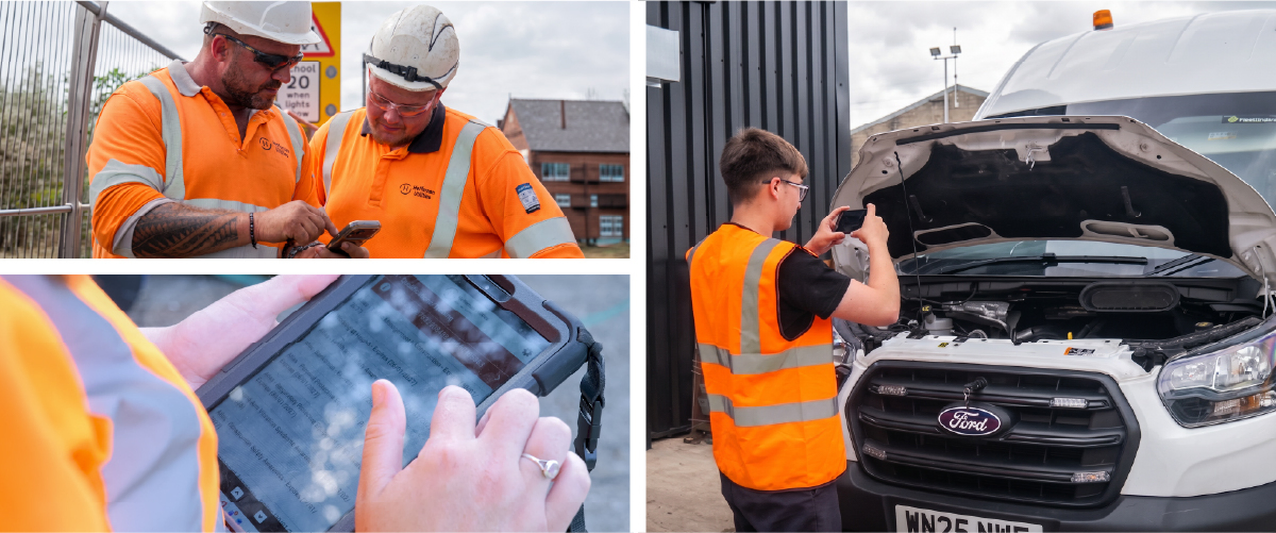
A form builder let the team shape their own processes
Heffernan originally went looking for better record-keeping, communication, task management, and compliance documentation. As the company kept expanding, the need became much bigger, and the team evaluated several options before choosing Re‑flow as their operations software of choice – a platform suitable for multiple sectors across infrastructure, from highways and commercial landscaping to civils. A key factor was the form builder, which lets the team capture field data and change processes without outside development.
Danny Rouse, head of SHEQ, explains what that meant day to day:
We didn’t have to rely on Re-flow to build our forms. We could just recognise a need and build a form and have it ready on the day or the week depending on the urgency.

Standardised workflows with clear steps for every scheme
Building scalable, standardised processes that are still flexible when evidence demands shift became a company priority.
Heffernan now use their software to build their established procedures into structured workflows that take each team through the correct steps and make sure critical ones can’t be overlooked.
The vehicle check shows how this works. A driver can’t see the location of their next job in Re‑flow until they’ve completed the vehicle walk-around. “They can’t even get the location where they’re going without doing a vehicle check,” Rouse says. “You don’t know where you’re going until you’ve done the walk around and you’ve confirmed your vehicle is safe to travel to work.” If the check flags a fault, the transport management team is notified in real time.
As the business has grown, Heffernan report less variation between departments, project managers, and sites, with teams following the same process whatever the type of project. They also report that responsibility for safety has moved closer to operational teams. With the increased visibility and potential scrutiny of field work, site managers and operatives are more accountable and take greater ownership of safety performance on site, while the SHEQ team provides support, guidance, and oversight where needed.
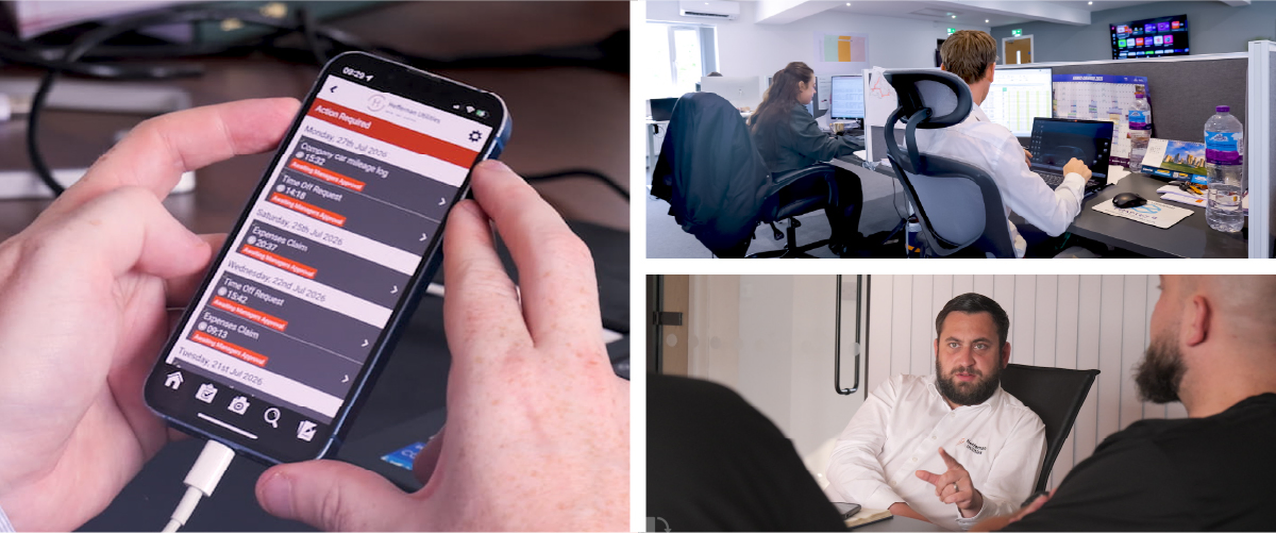
Risk assessments have become more efficient and streamlined, reducing a common point of friction and improving the quality of captured data. Paper‑based assessments have been replaced with digital forms that capture site-specific risks and observations. Rather than working through a predefined checklist, operatives record the conditions in front of them with a form that either pre‑completes repetitive tasks or hides unnecessary fields. This in turn improves consistency and produces a more accurate safety record.
The same records support oversight from a distance. With 30‑40 live schemes across the country, compliance managers can review site records, permits, photographs, and daily progress updates remotely, and check that permit conditions, signage, barriers, and site controls are in place. That spares compliance managers from travelling thousands of miles to visit sites. Heffernan say the ability to show compliance consistently has improved confidence among clients, regulators, and local authorities.
Audit evidence now takes about 30 minutes to pull together, not weeks
For Heffernan, records kept the same way on every scheme also make audit evidence easier to assemble. Rouse says putting a compliance pack together used to take “two, three weeks to gather everything together”. Now, he says, “within 30 minutes, I could be good to go.” This leaves the business ready for audits and accreditation reviews at any time.
Heffernan see technology as central to their ambition as they develop into a Tier 1 contractor – as they keep growing while avoiding the pitfall of significantly increasing back-office resource.
Without Re-flow, the business wouldn’t be able to achieve what it’s achieving. We wouldn’t be able to deliver the schemes that we’re securing.
Read the full Heffernan Utilities case study for more insights into SHEQ, operations, commercial, HR, and attendance management improvements.
Recent stories
 2 minutes read
Highways UK: bring your field operations questions to Re-flow on stand E11
 3 minutes read
‘Confronting roadworker abuse’: a new webinar continuing an important conversation
 2 minutes read