 4 minutes read
Transformation from the ground up: rethinking operations in highways and civils
 Oliver Revolta, Researcher & Copywriter
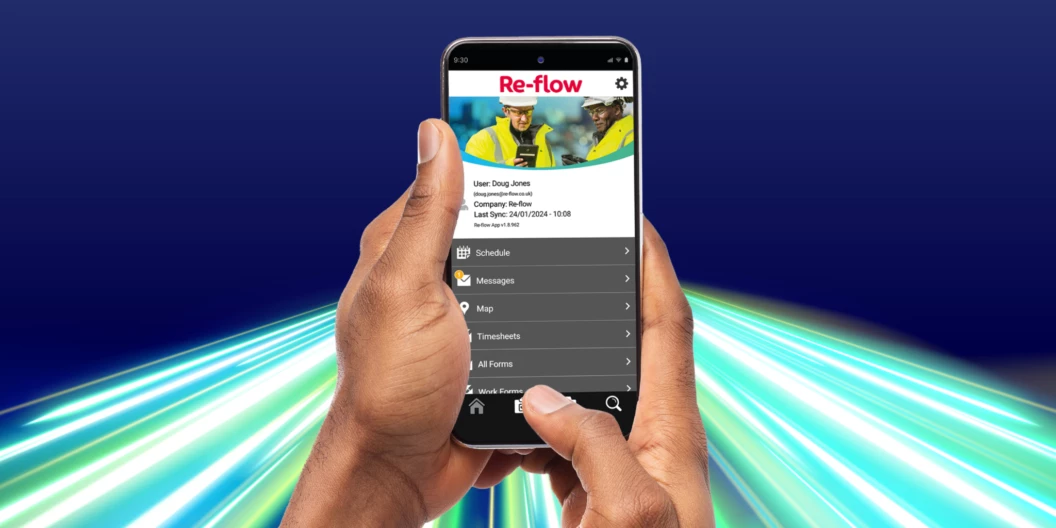
Companies operating within UK infrastructure have the constant need to evolve, with multiple challenges demanding long-term flexibility – from tightening regulations and the increased safety demands of the Building Safety Act to the pressures of rising costs and the threat of stretched workforces.
In their article, the ‘Top 10 Big Civil Engineering Companies Revolutionising Infrastructure in 2025’, AB Civils and Groundworks highlighted companies excelling in the ‘adoption of digital solutions’.
While the article included examples of businesses embracing the ‘headline acts’ of infrastructure software, all of which require specialist support – digital twins, BIM, and the IoT – there is another side of digital transformation that has its own significant impact…
Field management software, which addresses:
- The management of engineers, operatives, and assets
- Streamlining officed-based admin
- Compliance procedures
- Collecting data and KPIs from sites
This is digital transformation ‘from the ground up’ – focusing not on design and the initial planning stages for projects, but on making life safer, more efficient, and more compliant for those working on sites – and everyone organising them.
Common challenges addressed by a ‘ground up’ digital transformation
Firms across highways and civils will recognise some of the following day-to-day issues, all of which ultimately have a drag on productivity.
Though some might consider them ‘par for the course’, they really don’t have to be:
- Fragmented communication
Updates, reports, and information requests coming in via calls, texts, emails, or paperwork – often needlessly, due to miscommunication or confusion. - Slow manual processes
Operatives filling out forms on paper, supervisors chasing signatures, and office teams duplicating data into spreadsheets. - Disjointed systems
Oné tool for scheduling, another for audits, another for HR, and none fully integrated, therefore lacking the streamlining boosts of using connected systems. - Safety blind spots
Leaders find it difficult to track trends, and analyse risks without clear, consistent data.
What is a digital ‘operational transformation’?
In the context of highways and civils operations, a digital ‘operational transformation’ means:
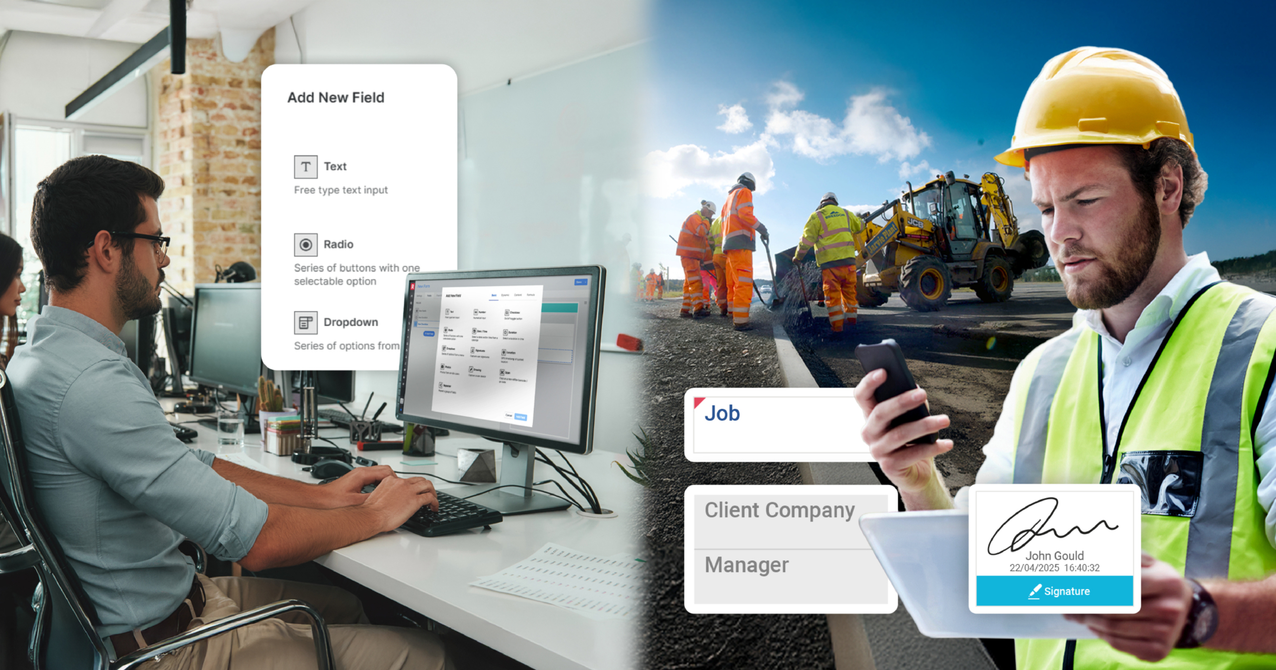
- Using technology to enable better performance out of field workers by streamlining the time-consuming processes we just mentioned – the form filling, collecting evidence (of defects, for example, via photos).
- Using software to solidify, speed up, and improve the operational workflow, making life easier for operatives while raising safety and compliance standards at the same time.
- Leveraging the power of a browser dashboard and a phone app (accessible on devices people already own, which reduces outlay and risk) to generate a seamless flow of data between sites and offices.
All of this allows for complete visibility of work progress from the office and for a complete audit trail and set of records – logged, accountable to users, filterable, and useful for reporting compliance and completed work to major contractors and local authorities.
What does a digital ‘operational transformation’ involve?
At its core, transformation involves three elements:
- Digitisation of workflows
Replacing paper and siloed systems with digital processes that flow end to end – from setting up jobs, to finishing them, checking them, and creating reports. - Clarity of data
Giving leaders the ability to see the true picture of what’s happening on sites in real time. - Ease of use
Ensuring that software tools are genuinely simple for operatives and supervisors to adopt, so that information is captured accurately without being a burden. Completing tasks (RAMS etc) becomes much more instinctive as a result.
When these principles are in place, businesses gain visibility and the chance to be proactive. Issues are flagged early, decisions are evidence-based, and teams work with greater confidence.
When these improvements to the workflow are repeated day in, day out, the word ‘transformation’ soon seems to be an understatement.
Case studies: transformation in practice
Plenty of highways and civils businesses have already made this shift, showing how operational transformation translates into measurable results.

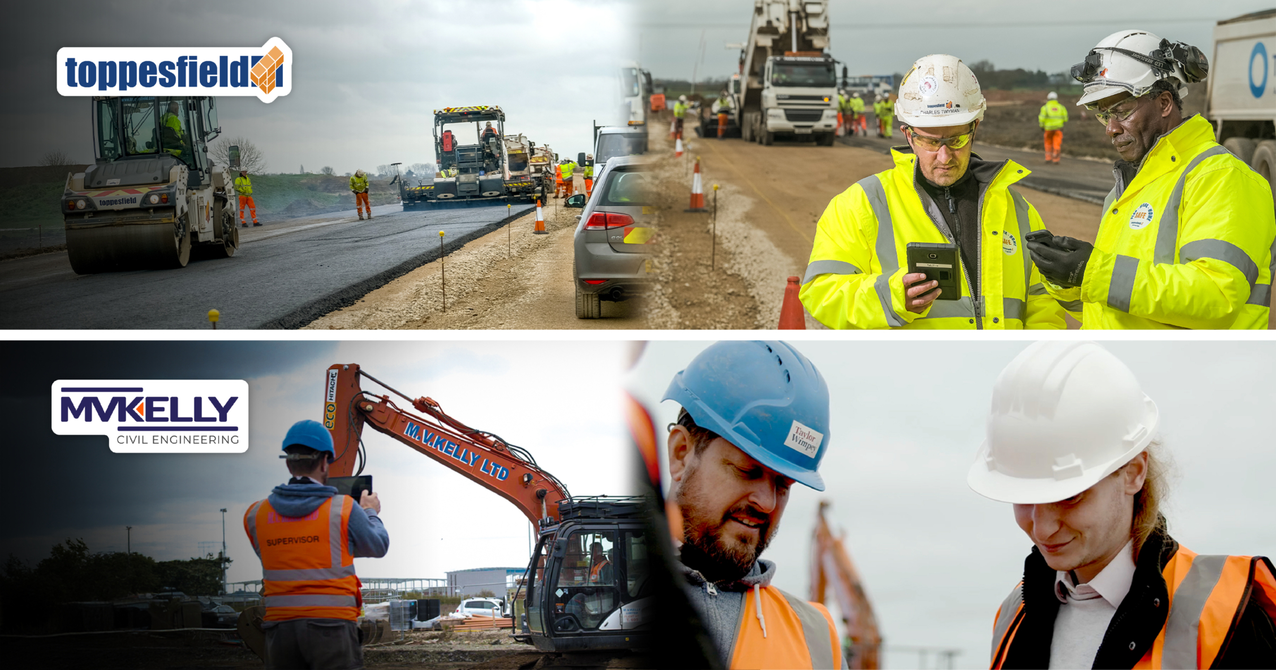
Toppesfield
The UK’s largest independent surfacing contractors were facing challenges with the consistency and flow of information back to the office. They were looking for a solution that would be easy for their operatives to use, provide consistent information, and improve their workflow. They adopted Re-flow Field Management to unify their operations, an impactful solution that has helped raise safety standards (e.g., defect reporting is up 90%) and gather real-time information.
Other improvements:
- The team were able to build KPIs around near hit reporting so they could learn from potential risks and mitigate them. Reporting is now at record levels.
- Any site information changes are shared on the app immediately.
Toppesfield have achieved near-perfect form compliance, with accurate, on-time submissions that support both safety and operational efficiency:
We can change the way forms look for users… All of a sudden, [operatives are] answering the right questions — and we get the information we need


MV Kelly
An award-winning construction and civil engineering company, with over 2,000 operatives undertaking various works on a mass scale across the nation, MV Kelly wanted to streamline communication, address manual processes and their resultant bottlenecks, and improve data from sites.
They now send 15,000 forms, 18,000 images, and capture 10,500 signatures on average every month through Re-flow. And with a hassle-free system, operatives no longer see health and safety enforcement as burdensome. Compliance has been revolutionised:
Re-flow has made it easier to complete safety forms. Operatives are requesting forms to go on to Re-flow…They actually want more forms on site because they’re realising how it’s benefiting them as much as it’s benefiting us in the office.


The next step in field management
The examples above demonstrate that with the right approach, operational transformation can be achievable, impactful, and essential.
Want more detail into these digital transformations?
Watch the case studies with MV Kelly and Toppesfield to see how each business is gaining huge value from Re-flow.
Recent stories
 2 minutes read
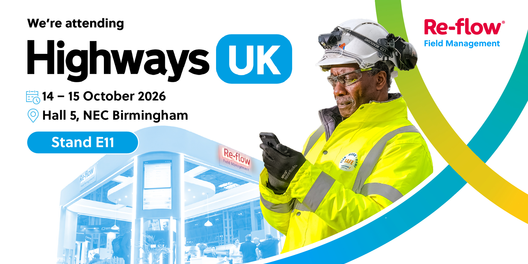
Highways UK: bring your field operations questions to Re-flow on stand E11
 3 minutes read
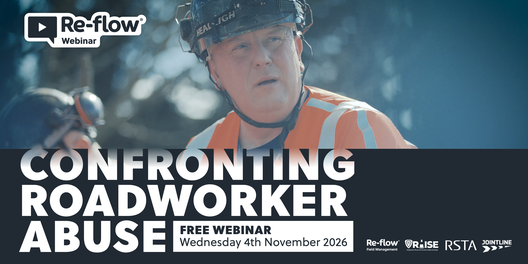
‘Confronting roadworker abuse’: a new webinar continuing an important conversation
 2 minutes read