What 2026 holds for the road-marking sector: RSMA Conference insights
 Oliver Revolta, Researcher & Copywriter
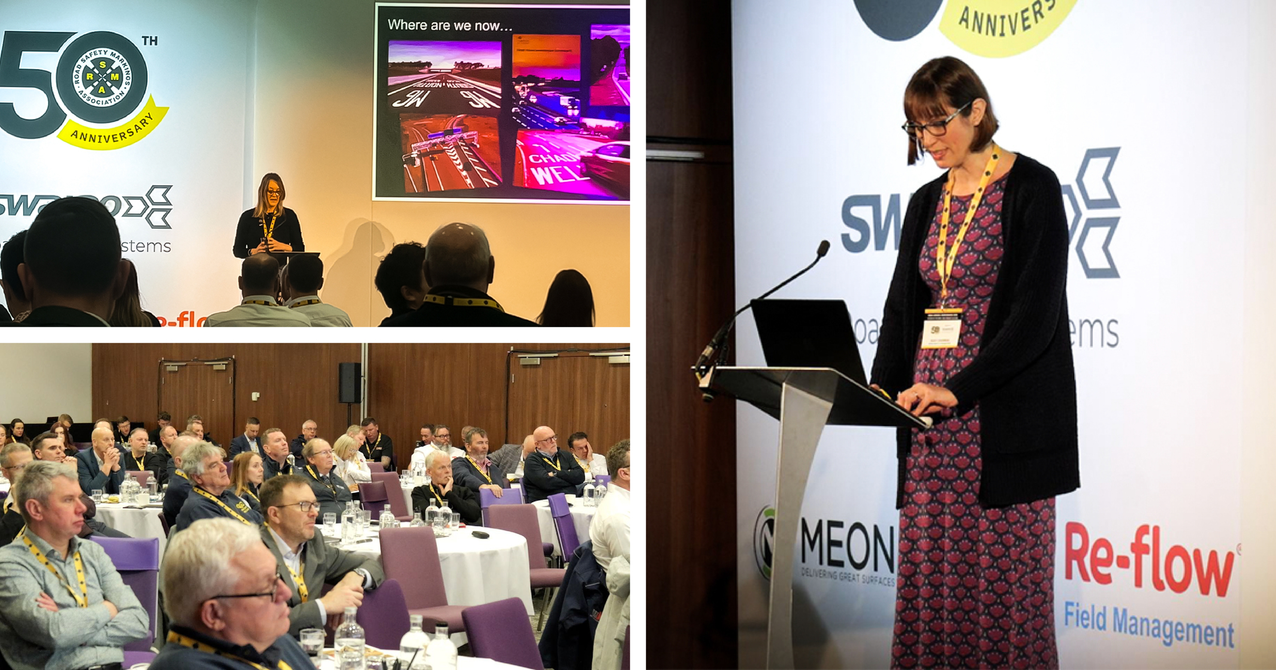
The RSMA Annual Conference & Dinner took place on 5 February – a milestone year marking the association’s 50th anniversary.
As one of the most significant fixtures in the road marking calendar, it’s a great opportunity to bring together National Highways, contractors, manufacturers, training bodies, and Re‑flow – the industry’s technology partner to examine sector developments and priorities for the year ahead.
As an RSMA endorsed supplier, Re‑flow welcomed the opportunity to meet long standing clients, speak with prospective users, and hear directly from industry leaders about the challenges and innovations shaping the sector.
Industry themes from the conference programme
This year’s programme covered workforce capacity, safety innovation, connected‑vehicle technology, health and wellbeing, and compliance.
Health, safety, and wellbeing
National Highways’ Melanie Clarke, joined by Andrew Cox (FM Conway), spoke about the Home Safe & Well approach – a framework emphasising shared responsibility across the supply chain and embedding safety by design into day to day delivery – reflecting National Highways’ long term commitment to reducing harm across the network.
Technology and innovation in safety
Several speakers looked at road marking innovation past, present, and future:
- Clearview Intelligence explained how newer road‑stud systems – including solar‑powered, sensor‑detectable markings – improve visibility for drivers and vehicle sensors.
- HAAS Alert presented their digital alerts that warn motorists about roadside works, building on UK use with WJ Group.
- The Road Safety Foundation pressed for proactive, data‑led risk management to cut casualties.
- The DfT set out work on connected‑vehicle data and digital services so the network is ready for new mobility.
Compliance and employment law updates
Following a period of significant legislative change, Emma McGrath (Citation) provided an update on new employment law requirements:
- April 2026 reforms include day one rights for parental and paternity leave, and a reworked Statutory Sick Pay system that removes the Lower Earnings Limit and makes SSP payable from day one.
- A new Fair Work Agency is due in 2026, consolidating enforcement and carrying penalties of up to 200% for National Minimal Wage, Statutory Sick Pay, and holiday pay underpayments.
- October 2026 will strengthen duties to prevent workplace and third party harassment.
- Proposed 2027 changes include day one unfair dismissal and new rules for zero hours contracts, such as guaranteed hours offers and reasonable notice requirements for shift changes.
These updates will roll out over 18 – 24 months, requiring contractors to keep policies and processes up to date as each phase comes into force.

Conversations from the floor
Alongside the conference content expert speakers, the event provided valuable opportunities for discussion across the supply chain. Members of the Re‑flow team met representatives from established contractor clients, emerging SMEs, and new entrants to the RSMA community.
We also welcomed Markon as a new signee and held constructive conversations with companies considering digital transformation, including those still weighing up the transition from manual, paper driven workflows. These organisations were particularly interested in the difference operations management software can make when it’s been built alongside clients, and with a specific focus on the workflows of road-marking businesses.
Re‑flow will continue to work closely with RSMA members, supporting the drive towards safer operations and smarter workflows across the sector.
Discover the benefits of operations software built to the specific needs of line marking businesses.
Recent stories

 2 minutes read
Highways UK: bring your field operations questions to Re-flow on stand E11
 3 minutes read
‘Confronting roadworker abuse’: a new webinar continuing an important conversation
 2 minutes read