Turn carbon reporting into an easy, repeatable process
 Oliver Revolta, Researcher & Copywriter

For many infrastructure businesses, the challenge with carbon reporting is making the process practical enough to run consistently, without rebuilding reports from scratch every time – and without relying on inaccurate figures, guesswork, and manual data entry.
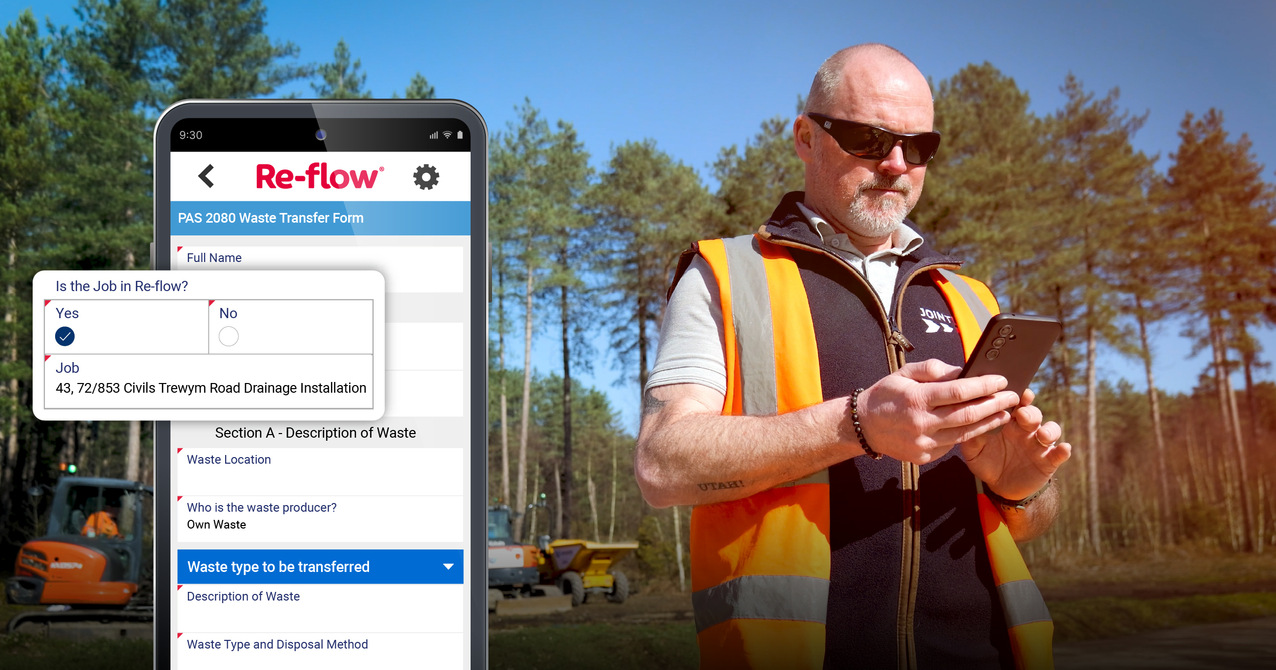
Making these processes more intuitive is the intent behind Re‑flow’s PAS 2080 module, which anchors carbon quoting and reporting to job, asset, and BoQ data already within its software and weaves data capture into existing forms and processes.
This way teams get consistent carbon data captured without changing the way they work. Bid and commercial teams can draw on data structured and ready for tendering, strategy, and pricing. And carbon leads work from the same information to support audits.
How to build a consistent, repeatable carbon reporting process
A repeatable process starts with a simple idea: set up carbon values once, then let the dedicated operations software do the work.
Digital solutions like Re‑flow Field Management already support estimating, scheduling, asset management, and data capture. Resource usage is already visible.
There’s some setup initially, but once that’s completed, teams are ready to integrate carbon data capture as intuitively as any other process.
Step one:
Items and services are assigned carbon scores, as are transport methods and vehicle types (including laden and unladen instances).
Step two:
Next comes setting up wastage types within the PAS 2080 area of the dashboard, including how materials are disposed. With this, waste information captured via on-site forms flows straight into the company database.
Re‑flow’s software then starts to do the heavy lifting. The scheduler already provides jobs with locations and relevant distances. This combines with the forms teams are already using to capture key inputs. There is rarely any ‘extra’ work and minimal impact on site and in the office.
When it’s time to generate a report, the process leads to clear visibility of estimated quantities compared to recorded actuals.
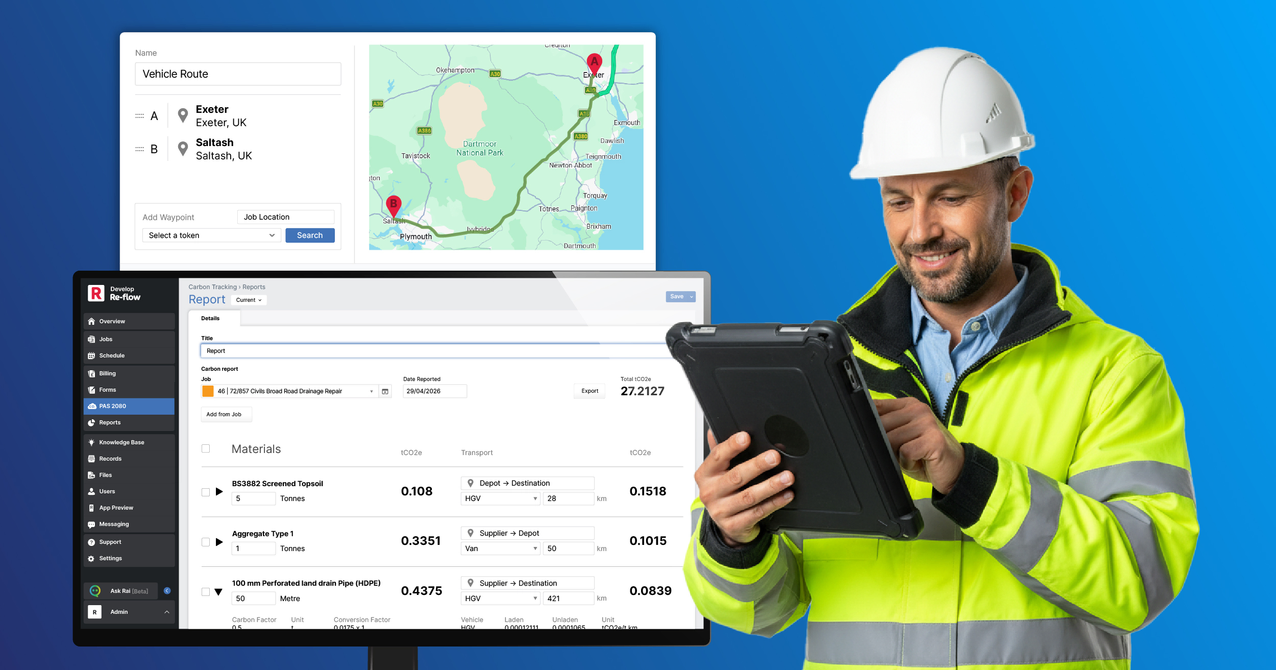
In Re‑flow, forecasting and reporting are clearly defined, so what was expected at tender stage can be understood separately from what actually happens on site. Each report links back to its source data, creating a clear audit trail and making it possible to run the same reporting process again using consistent inputs. And once assets and other factors have been assigned accurate carbon scores, they are ready to use on future jobs without further setup.
As the demand for more detailed carbon reporting continues to grow, that pressure can affect everyone across the business, from management through to people working on site day‑to‑day.
With Re-flow, teams no longer rely on chasing data or piecing together reports. Information is captured through everyday work, creating an accurate, consistent reporting environment without disrupting delivery. The process feels more controlled and predictable, with fewer last‑minute requests and less reliance on individual judgement to fill gaps.
What’s more, reporting becomes a way to demonstrate a higher standard of operations. With consistent, well‑evidenced data, businesses are better equipped to meet client expectations and stand apart in how they manage and present carbon performance.
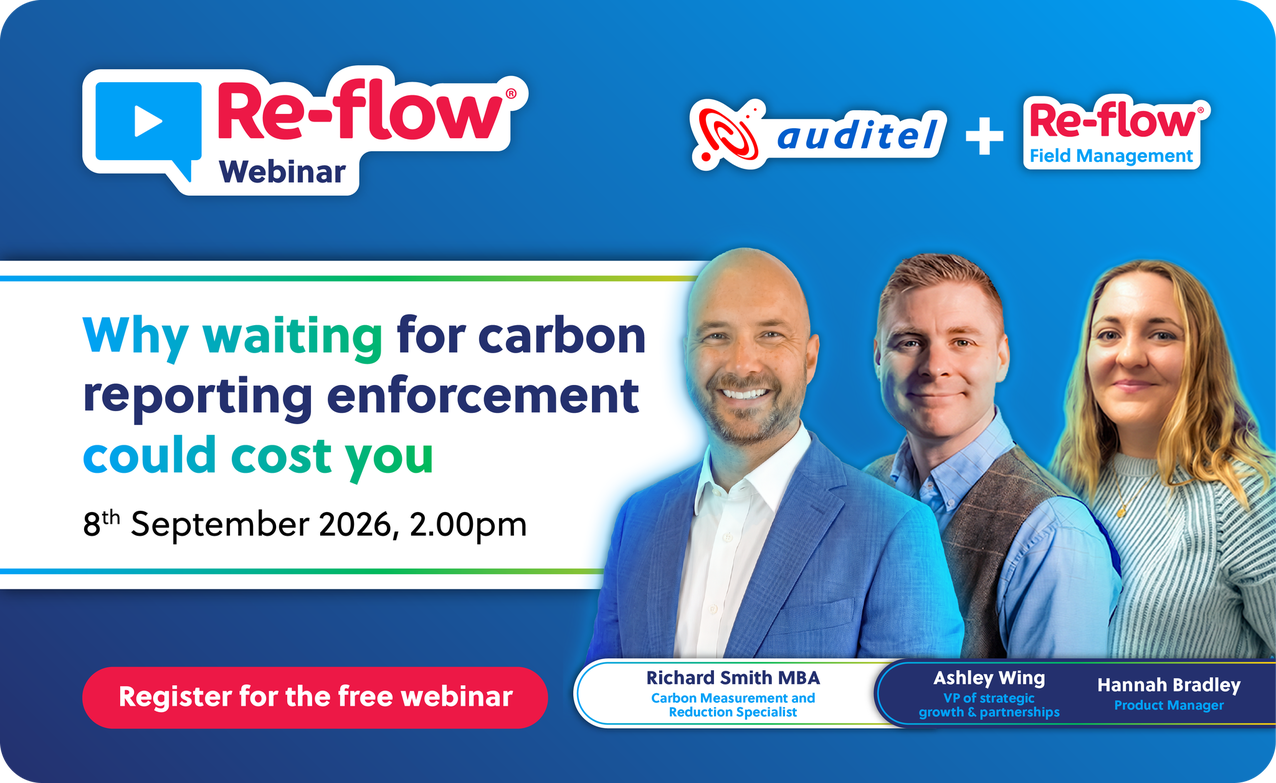
Join PAS 2080 specialist Richard Smith, product manager Hannah Bradley, and VP of strategic growth & partnerships Ashley Wing for a practical discussion on carbon reporting.
Learn what businesses are doing today to prepare for future requirements, and bring your questions to our live Q&A.

Recent stories
 2 minutes read
Highways UK: bring your field operations questions to Re-flow on stand E11
 3 minutes read
‘Confronting roadworker abuse’: a new webinar continuing an important conversation
 2 minutes read