Evidence safety, quality, and compliance
Learn how Re-flow is improving compliance and safety culture across the country
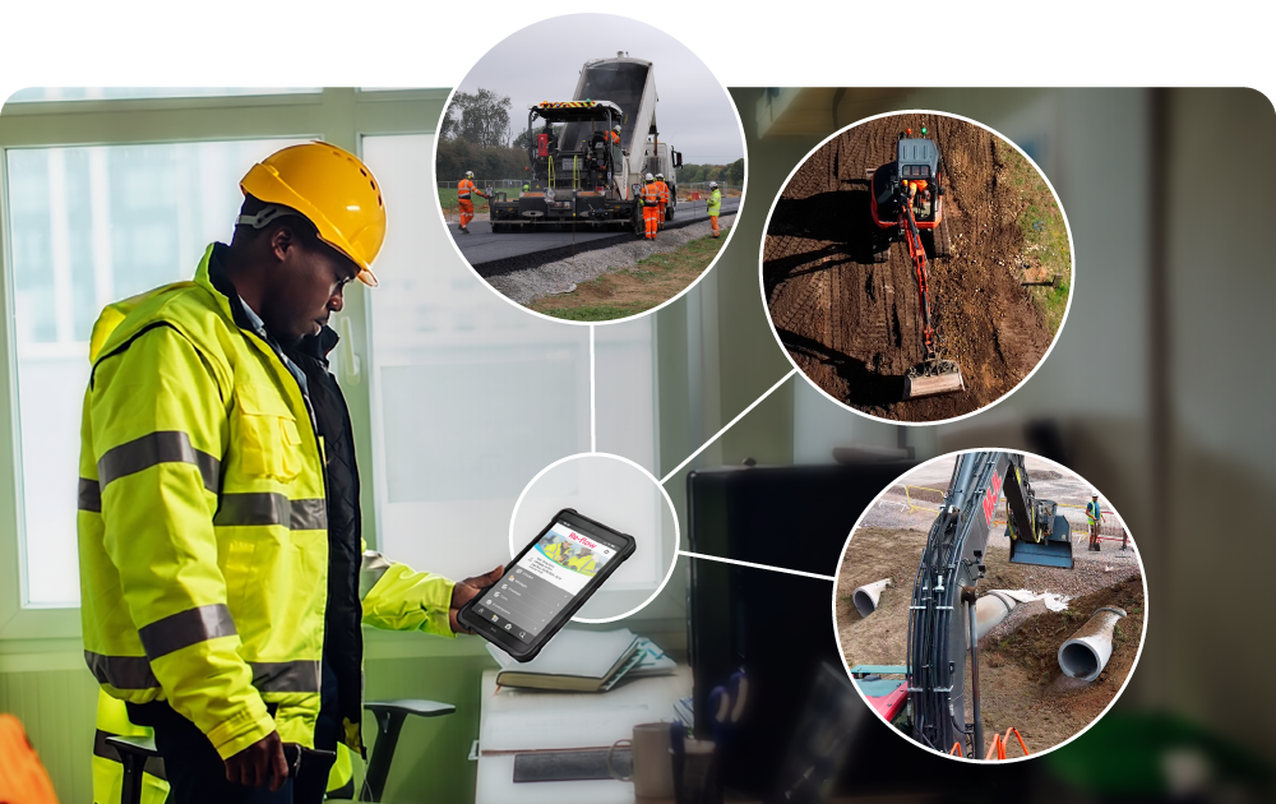
Re-flow has been designed for complex field operations – across highways, civils, utilities, commercial landscaping, and related sectors. It builds your safety, quality, and compliance processes into the work itself. Issues reach the people who can fix them, and a reliable record grows organically, ready for audit, handover, and client questions.
Helping companies to run more efficiently every day













On site
Give every team what they need in their pockets
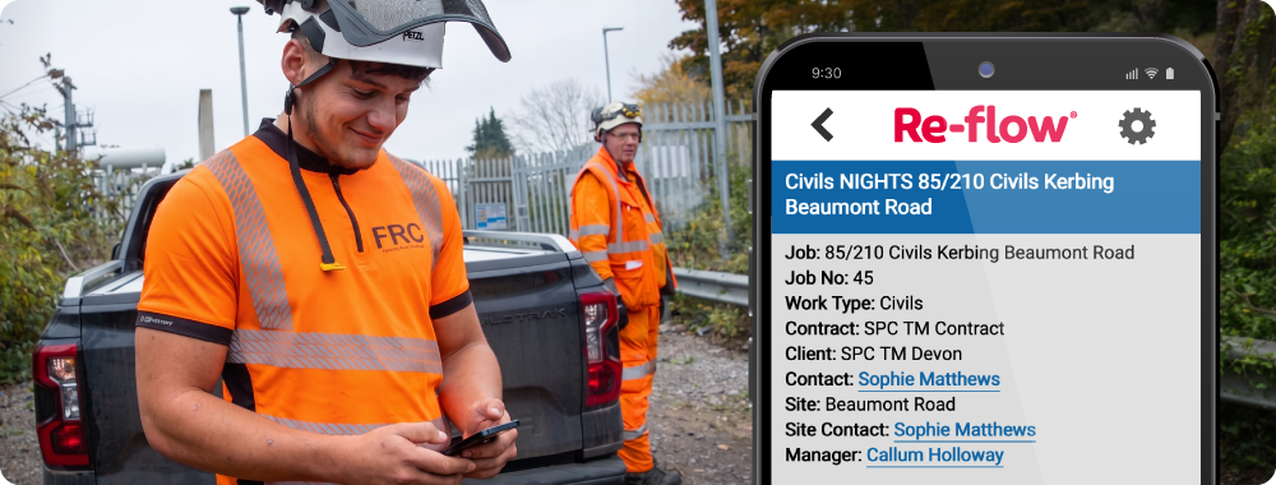
Through an on-site phone and tablet app, Re-flow keeps each job’s instructions, drawings, and forms accessible in one place.
Always have the latest instructions on hand
When drawings and method statements exist digitally outside of a dedicated management platform, or if they exist on paper and have to be printed and driven to site, crews risk accidentally working from an out-of-date version.
South Wales Sports Grounds, who build sports facilities from grassroots pitches up to stadium level, used to take updated RAMS and drawings out to site on paper. They now upload them to Re-flow, and the site team has them straight away.
Bridge Civil Engineering work for several clients, and each one expects different standards. They keep each client’s documents in the app, including ISO certificates, CHAS, SIP accreditation, and insurance certificates, and update them as they renew. That way, site staff always have the current set for whichever client they’re working for.
Toppesfield review their risk assessments every year and upload each new version to Re-flow when it’s approved, so the copy their site teams open is always the latest.
Know which version each job was given
If a controlled document can be downloaded, saved, and reused weeks later, nobody can say for certain what version a crew was working with on any given day.
At Jointline, managers used to save risk assessments and safe systems of work to their laptops and reuse them later without checking whether they’d changed. Teams now pull documents into each job directly from a centralised Re-flow database, so an outdated copy can’t reach site. If a question comes up a month later, Jointline can see exactly what the crew were given at the time, even if the document has since been revised.
On National Grid work, Bridge Civil Engineering sometimes find underground cables or chambers that weren’t on the plans, which can invalidate the agreed method. Bridge stop, redesign, and update the method statement in Re-flow, and the site team reads and acknowledges it digitally before carrying on. Before Re-flow, the same change meant phone calls, reprinted forms, and a drive of two or three hours across the South West.
Start new people at the same standard
A new starter can be set up in Re-flow from the first day, which helps them work from the same instructions, forms, and checks as the rest of the team.
Heffernan Utilities use Re-flow from an employee’s first day through to the end of each job. Re-flow training is a short part of their site inductions, and their Head of SHEQ, Danny Rouse, says it clicks with operatives straight away because it’s intuitive and straightforward to use.
At Toppesfield, each person sees only the forms that apply to their role, so a new foreman or plant operator isn’t faced with a long list of irrelevant paperwork. They get to focus only on what’s relevant for them, reducing complexity.
Steve Hoskin Construction carry out drug and alcohol testing on every new starter’s first day. The result is recorded in Re-flow and goes straight to their HR manager.
Guide every check so the evidence is captured first time
Re-flow provides businesses with a logical evolution in form filling, streamlined to save time, and delivered in an intuitive and familiar in-app format.

Walk through the check step by step
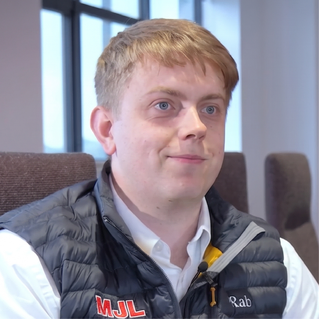
MJL’s daily foreman check asks for photographs at set points around the site, such as the oil and diesel bay and the mixing bay. Their project manager, Glynn Mitchell, explains that taking the photo makes people look properly at what’s in front of them. If the skip next to the mixing bay is full, they get it emptied, and if a barrier has gone from a walkway, they put it back. On a paper sheet, he says, it was easy to tick down the list without looking. The check now gets the site straightened up a little every day.
The form itself can also make it harder to skip a step. MJL make some steps in their forms mandatory, such as sign-offs or a photo taken at the point being checked, with its location recorded. If the form asks for a photo, they know someone has gone and looked. MJL see this as a way to bring less experienced operatives up to the same standard as everyone else and raise that standard steadily.
At Toppesfield, the aim has been forms that need no instructions. The details of each day’s job are planned in the office and sent to Re-flow in advance. Site teams then only confirm what’s there or add what’s missing, which leaves them free to record what they actually did. Feedback from site has been very positive.
Ask only what applies to the task
A form that asks every question every time slows people down and buries the answers that matter.
Danny Rouse at Heffernan Utilities explains that when a crew are laying concrete on a new build with no existing utilities, questions about services or scaffolding add nothing. Once people get used to ticking past irrelevant questions, it becomes easier to miss the hazards that are actually there. Now, on Re-flow, Heffernan tailor the briefing and questions to the day’s task instead of using one generic form, so the site teams only see the relevant questions.
Toppesfield’s “Top 10 in 10” programme aims to eliminate the business’s ten biggest risks within ten years. Each risk used to have its own audit form. They’re now combined into one, and the questions change depending on which audit the user selects and how they answer questions. Site teams have one place to go, and the health and safety team gets consistent returns processed from one document, which makes managing complicated initiatives much easier.
Toppesfield’s daily order form works the same way. If plant needs delivering, the form opens a further set of questions. For example, if they need access for a low loader, questions open up for issues such as turning space and low bridges. If it doesn’t, those questions stay hidden.
Ask for the photo at the point of work
Most work looks different once a crew moves on. It’s covered, surfaced, backfilled, or handed over, and the best time to photograph it has passed.
MJL’s groundworks teams record each job in Re-flow as they build it, and the forms ask for photos at each stage. Before, proving something later meant digging the work back up, or hoping someone still had a photo on their phone. Each stage of the job on the Re-flow app now has its photo attached to the form.
The photos also give the office something to act on. MJL’s health and safety advisor uses the time-stamped photos in managers’ and foremen’s inspections to set deadlines for fixing the problems they show. At Traffic Management Installations, contracts managers and administrators review site photos as each job is submitted, and call the crew if something needs changing.
Signal isn’t always there when the work is. Breedon’s surfacing teams in remote parts of Scotland take the photos the form asks for even when they’re offline, and everything uploads once they’re back in coverage.
Spot a weak submission sooner
A missing detail found weeks later is very hard to put right.
At Heffernan Utilities, crews complete their risk assessments and site managers complete their daily briefs before an 8:30 call each morning. Everyone on the call can see both documents. Hazards that have been missed can be picked up from head office, even for a job at the other end of the country, and extra controls suggested before work begins.
Heffernan’s SHEQ team also review site documentation as it comes in. When something doesn’t add up on safety, environment, or quality, they contact site and raise it before an incident occurs.
Jointline now require a manager to review and approve every timesheet. Operatives can no longer approve their own. The approval status shows in red or green, so the finance team can focus on the ones that need attention.
It’s easy for site teams to report on Re-flow. And if you make something easy, people will do it.

Site and office
Confirm people and equipment are ready before work starts
Re-flow checks a database of your people and equipment against each job’s requirements.
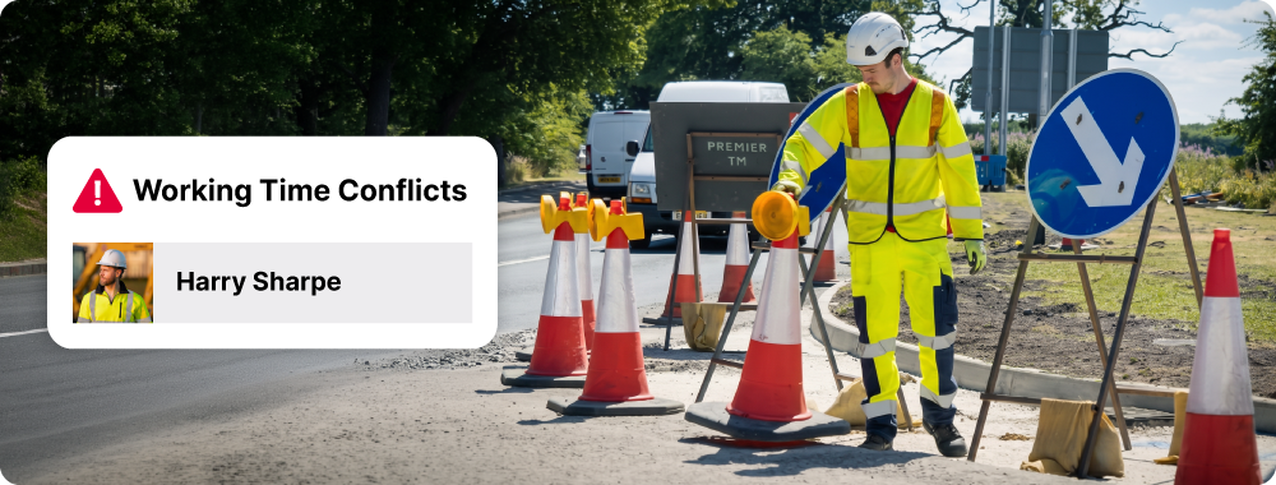
Check qualifications before someone is booked
No business will be happy when expired qualifications and certificates come to light at the worst moment – on site, in front of the client.
Traffic Management Installations get automatic reminders before qualifications expire, which helps a small administration team keep training records up to date for around 120 people.
When Jointline needed staff with a specific certification, a search in Re-flow found them in moments. They estimate the same search took around an hour under their previous system.
Keep working hours in view
Hours that arrive a week late or on a system that doesn’t track them properly makes keeping up difficult. By the time anyone sees a long week or a run of weekend call-outs, it’s too late to address them.
Breedon’s contracting administrator in Falkirk processes timesheets for around 80 operatives. On paper, she says, the sheets used to be inconsistent, the handwriting was hard to read, and they arrived whenever people got round to sending them. On Re-flow crews now submit them every day, so she’s always working from that day’s hours instead of waiting and chasing.
At Bridge Civil Engineering, site staff fill in hourly timesheets. Rules built into the form pick out evening and weekend working automatically, so out-of-hours time is recorded correctly in each person’s weekly total.
Core Highways’ timesheets used to be on paper, kept in their depots, so nobody outside the depot could see them. Their payroll team can now see every individual’s timesheet as it’s submitted, which gives them a much stronger audit trail.
Jointline record working time in Re-flow alongside their daily worksheets and vehicle checks. Hours, breaks, and potential fatigue are visible to managers, and the records are ready if the HSE ever needs to see them.
Hold the job until the vehicle is checked
A vehicle that goes out unchecked puts the crew, the public, and the programme at risk.
Heffernan Utilities used to receive vehicle checks at the end of the week. Heffernan now withhold the job’s postcode until the walk-around defect check is done and the vehicle is confirmed safe to travel. Crews didn’t understand it at first, but it now works well for the business.
Toppesfield build logic into their forms so that work can’t begin until the required safety checks are complete.
Review a permit with the evidence in front of you
A permit signed without the supporting evidence to hand is little more than a signature.
At Heffernan Utilities, each site’s briefing and records come into the 8:30 daily management meeting. Operations review them there before releasing the permit that allows the site to start work for the day. If something later goes wrong, Heffernan can show what was in place when the permit was issued, including their survey, the CAT and Genny scan, equipment calibration, and the operatives’ competencies.
Route every issue to the person responsible for it
Re-flow cuts out wasted time by automatically sending issues to the people who need to see it.
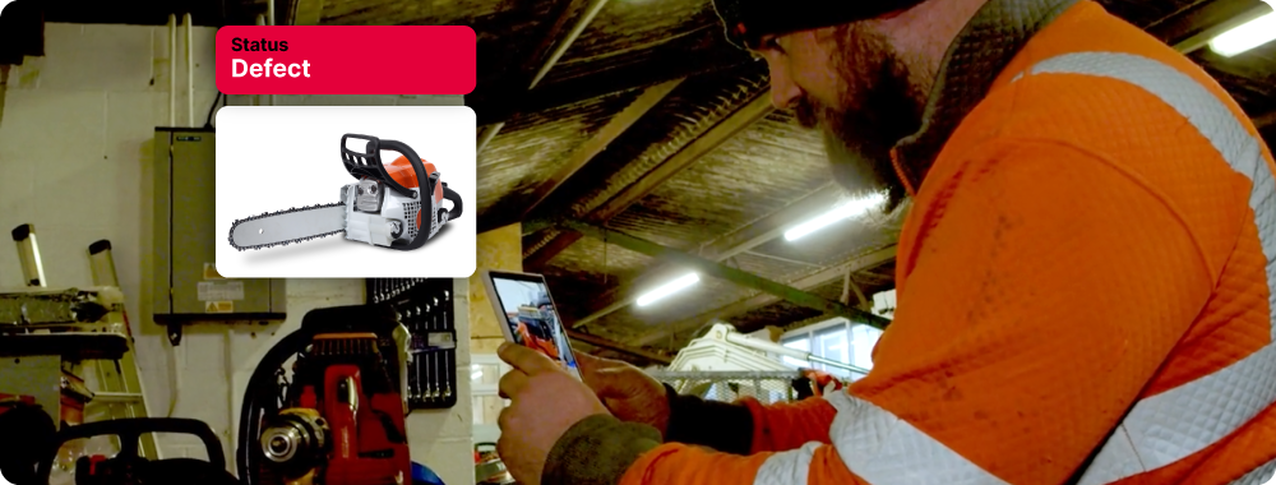
Send a defect or failed check to whoever needs to see it
When a form records a defect, a failure, or something that needs approval, Re-flow can notify the right person and put it in front of them with the record attached.
At John Wainwright & Co., defects go straight to the fitter. At Traffic Management Installations, a failed vehicle check alerts the fleet and mechanic team.
Toppesfield record plant defects as soon as they’re found and alert their maintenance team, so small faults are fixed before they become breakdowns. Avoiding issues can save a significant about of money – when a surfacing job stops mid-lay, the cost includes wasted hot asphalt as well as lost time. Re-flow helps manage and eliminate that risk.
Spot an overdue form the same day
A missing check usually goes unnoticed until someone asks for the record.
Toppesfield send a compliance report to middle managers at half past nine each morning, showing which briefings and checks haven’t been done, so they can nudge their teams. A second report goes to directors at half past ten, by which time most gaps have been closed.
On the Re-flow dashboard, Jointline’s managers can see straight away which daily vehicle defect reports haven’t been completed, and follow up the same day.
Keep the response with the record
When responsibility changes, you can reassign a form to its new owner. South Wales Sports Grounds do this when a new supervisor takes over a project, so the history stays with the job and doesn’t leave with the last supervisor’s tablet. The record can then show who was told, who acted, and when.
Focus your team’s energy where it’s needed
A safety or quality team can’t be on every site every day.
Steve Hoskin Construction’s health and safety advisor uses dashboards to monitor nearly 25 sites remotely, which also cuts the travel, fuel, and printing that site visits used to need.
Because Heffernan Utilities have the paperwork from every job, their SHEQ team can see which sites’ standards are slipping and target their visits where they can make a difference, instead of spreading their time evenly.
Jointline’s head of civils and maintenance can deal with many site issues remotely from the information coming in, and estimates this saves him 10 to 20 hours a week in site visits.
In the office
Keep a long-term operational record you can trust
Re-flow files every form, photo, and sign-off against its job as the work is done, so records for audits and client queries are always a quick search away.
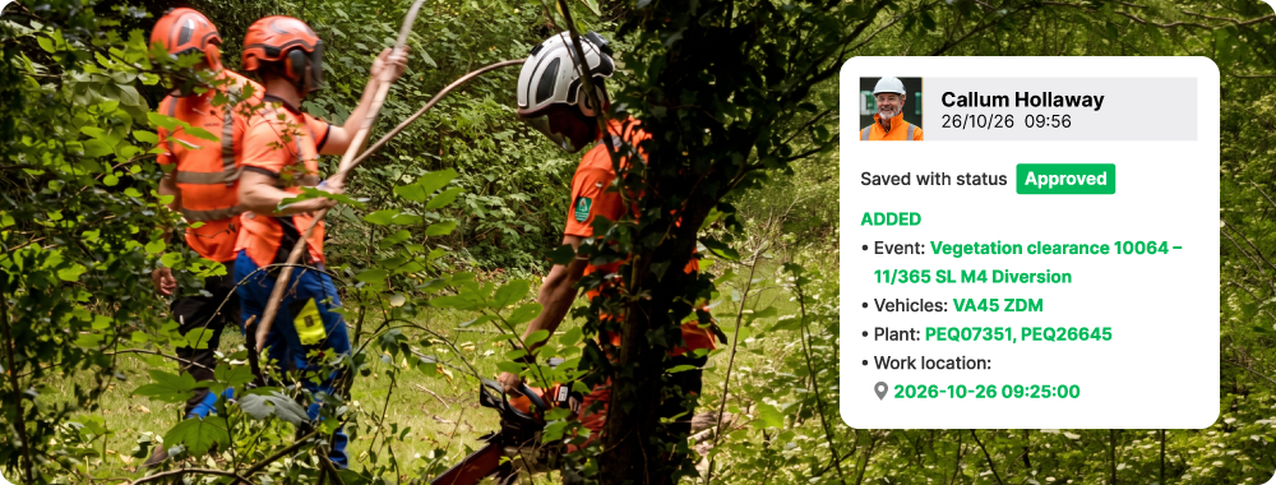
Pull an audit pack together without the stress
Preparing for an audit can take weeks when the evidence is scattered in multiple places – online or offline, across vans, filing systems, and digital folders and inboxes.
Before Re-flow, Heffernan Utilities’ records were split between Microsoft Forms, paper booklets kept in vans, and a pigeonhole in the back office. Preparing for an Achilles audit took two or three weeks. Using Re-flow, a compliance pack now takes around 30 minutes, and Danny Rouse describes the business as constantly audit ready.
Bridge Civil Engineering can produce their ISO audit documents straight away, signed and time-stamped as evidence the work was done correctly at the time. This evidence and the successful audits help the business win during tenders too.
Answer a question from the record, not from memory
When a client or an investigator asks what was done on site and who was involved, the forms, photos, drawings, dates, and names are on the job. MJL note that without Re-flow’s records and photos taken at the point of work, an issue found later required excavation to investigate. Luke Serpell says that if a question comes up about something like a retaining wall, “we have a full document with all the evidence, all the photos, what drawings we used, the date we done it, who was involved”.
After an incident, people remember things differently. The record is what will be relied on for any business operating across the country. If the worst happens and someone is injured, HSE will want to see that the business met its legal obligations. Re-flow’s dated site records provide that evidence and because job records keep the documents that were issued, they can show what a crew were told a month ago, even if the risk assessment has since been revised.
Hand over a record the client can read
Client paperwork that has to be retyped, rescanned, or chased slows down sign-off and payment.
Toppesfield complete joint inspections and site communications with the client on site. Both sides sign on Re-flow, and the client receives the PDF as soon as the form is submitted, replacing the duplicate paper forms they used to countersign.
Danny Rouse at Heffernan Utilities meets some clients’ heads of SHEQ every week, and they review Heffernan’s safety data together as it comes in. He also uses evidence from Re-flow in tenders, so clients see proof of what Heffernan do as well as what they say.
At South Wales Sports Grounds, clients have been impressed that they can get a copy of on-site checks and reports as soon as they’re completed.
Know where a record came from
A record carries more weight when it shows where it was made, when, and by whom.
Traffic Management Installations’ timesheets are geotagged, so arrival and finish times come with a location. Core Highways’ site evidence includes GPS, a timestamp, the date, and the location.
Learn from the record and fix the process
When every site answers the same questions – and there’s a centralised platform to actually see the trends – a repeated hazard, a failed check, or a weak form tells a story the business can act on.
See what keeps coming back
A problem logged once in a paper file is easy to miss the fifth time it happens. Near misses, for example, are often under-reported in the industry, and this lack of visibility makes improvement difficult.
With Re-flow that changes. At South Wales Sports Grounds, near-miss reports rose from one in 2021 to 86 in a later year. Near misses, toolbox talks, lessons learned, and quality completion can all be reviewed from the same records at the end of a project during close-out meetings.
Heffernan Utilities now record more than 30 near misses a week. With that volume, the team can see whether a trend is limited to one site or running across the business, and deal with it before it becomes an incident.
In other areas, site reports and inspections at Bridge Civil Engineering showed that crowd barriers were repeatedly being placed too close to excavations. Once the pattern was clear, Bridge changed their policy and methods.
Jointline used to collect safety reports through paper, email, suggestion boxes, and conversations with line managers, and getting useful data from them was close to impossible. Reports now come into one place, where they can be filtered by near miss, hazard observation, positive observation, incident, and accident.
Challenge a thin record and fix the form behind it
If a form is too long, unclear, or being ticked through without thought, then it’s not doing the job it needs to do. But fixing these issues outside of a single system built for field operations is difficult.
During an audit, Danny Rouse at Heffernan Utilities used Re-flow to improve a site manager’s point-of-work risk assessment to eliminate time-consuming manual typing that was directly impacting the quality of submissions according to the site manager. They worked out a fix: selecting the work type from a drop-down menu now fills in the standard control measures for that type of work, giving the same baseline on every site no matter who fills it in.
Toppesfield’s daily order form has improved through Re-flow. Site teams suggested ways the form could be simplified while the logistics team said what they needed – the result is a form with no wasted detail.
When a client asks for something extra, such as more detailed wind-speed records, Bridge Civil Engineering add it to their standard forms in the form builder.
We can ask questions to Re-flow reports and it will produce the answers we need to make an educated decision on where to progress and invest. We can target areas for training, quality, health and safety, or production.