Highways green report 2024
 Oliver Revolta, Researcher & Copywriter

Managers want to move their businesses into the future in a healthy state. Keeping up with opportunities and new technologies like AI and management apps is a huge part of that – and it’s the same with net zero.
Combating climate change might already be enough of a motivation, but if it’s not then financial and business growth impacts will likely take up some of the slack:
- Governments around the world are implementing stricter regulations to curb carbon emissions. Adopting net zero strategies ensures compliance with these regulations and avoids penalties.1
- More and more, an emphasis on being green and sustainable leads to positive financial results. Businesses in infrastructure can unlock new revenue streams, whether that’s retrofitting buildings, or installing energy-efficient systems. Clients will expect the likes of ISO 14000 environmental management. New contracts will be won by companies in part with the best green credentials.
Several financial initiatives were introduced by the previous government:
- UK Infrastructure Bank (UKIB): Formed by the previous government, this state-owned bank provides loans, equity, and guarantees to support infrastructure projects with clear green benefits. It aims to catalyse private investment in the sector.2
- Green Finance: The development of green bonds and tax incentives are destined for sustainable investments. These initiatives aim to attract capital towards low-carbon infrastructure projects.
- Other Public Sector Investment: Significant public funding was allocated to infrastructure projects with a focus on sustainability, such as the National Infrastructure Strategy, which outlined plans for investing in transport, energy, and digital infrastructure.
Labour have taken up the mantel:
- National Wealth Fund: Labour’s pre-election manifesto announced an intention to ‘partner with business’ to ‘invest in industries of the future’ with the aim of creating 650,000 jobs. As recently as mid-July new chancellor Rachel Reeves announced the National Wealth Fund, which aims to align the UK Infrastructure Bank and the British Business Bank to unlock billions in extra investment.
- Private Sector Partnerships: Public-private partnerships (PPPs) have been employed to deliver large-scale infrastructure projects, sharing risks and rewards between the government and private investors. This looks set to continue.
Overall, levels of reputation and/or stakeholder trust will be entwined in each business’s green response, while investing in energy-efficient technologies and sustainable practices can also lead to significant cost savings and reduce operational expenses.3
Businesses that adapt early will be better positioned to thrive in a low-carbon future.
Labour’s pre-election manifesto announced an intention to ‘partner with business’ to ‘invest in industries of the future’ with the aim of creating 650,000 jobs.

UK Net Zero targets
Under the previous government the UK originally set ambitious targets to achieve net zero greenhouse gas emissions by 2050. The targets were designed to mitigate climate change, promote sustainable development, and position the UK as a global leader in green technology and innovation:
- 2030 Target: By 2030, the UK aims to reduce emissions by 68% compared to 1990 levels. This includes significant reductions in emissions from power generation, transportation, and industry.
- 2035 Target: By 2035, the UK targets a 77% reduction in emissions. This milestone is crucial for staying on track to achieve net zero by 2050.
- 2050 Target: The ultimate goal is to reach net zero emissions by 2050. This involves decarbonising all sectors of the economy, including energy, transport, buildings, and agriculture.
These targets are part of the UK’s commitment under the Paris Agreement to limit global warming to well below 2°C, with efforts to limit it to 1.5°C.4
The Scottish Government set their own net zero target of reaching net zero by 2045.
Achieving these targets presents both challenges and opportunities:5
Challenges:
- Technological Innovation: Developing and deploying new technologies for carbon capture, renewable energy, and energy storage is essential but requires substantial investment and research.
- Economic Transition: Transitioning to a green economy involves significant changes in industries and job markets. Ensuring a just transition and training for workers and communities is critical.
- Policy and Regulation: Implementing effective policies and regulations to drive emissions reductions while maintaining economic stability and public support
is complex.
Opportunities:
- Investment in Green Technologies: The transition to net zero is a significant investment opportunity. It is estimated that reaching net zero by 2050 could unlock £90 billion in investment by 2030.6
- Job Creation: The green economy is expected to create hundreds of thousands of jobs in renewable energy, energy efficiency, and sustainable infrastructure.7
- Global Leadership: By achieving its net zero targets, the UK can position itself as a leader in climate action, influencing global policies and encouraging other
nations to follow suit.
By achieving its net zero targets, the UK can position itself as a leader in climate action, influencing global policies and encouraging other nations to follow suit.
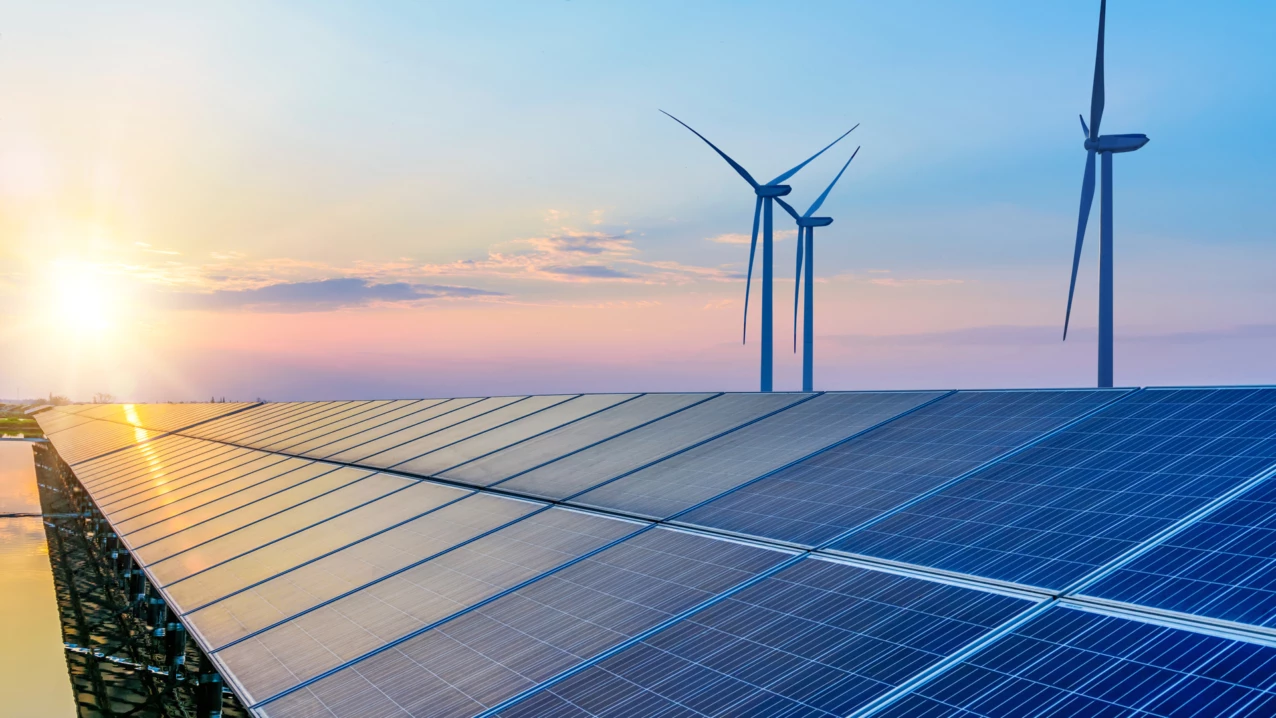
The government have set goals to transform the UK into ‘a clean energy superpower’, aiming to ‘address the climate crisis while boosting the economy and creating jobs’. Their green and net zero plans focus on several key areas:8
Overview of policies and commitments
Labour’s green agenda is centred around making Britain a global leader in clean energy. The government has committed to achieving 100% clean power by 2030, which includes doubling onshore wind, tripling solar power, and quadrupling offshore wind capacity.9 They also plan to invest in carbon capture and storage,10 hydrogen,11 and marine energy12 to ensure long-term energy storage
and sustainability.
Key initiatives and targets
- Great British Energy: The government plans to establish a publicly owned energy company, Great British Energy, to drive the transition to clean energy and reduce reliance on fossil fuels. This initiative aims to cut energy bills, create jobs, and deliver energy security.13
- Green Prosperity Plan: This plan involves significant public investment to attract private funding, focusing on industries of the future. It’s aim is to create 650,000 jobs by 2030 and support the development of green technologies.14
- Energy Efficiency: The government intends to upgrade millions of homes with better insulation and energy-efficient systems, aiming to reduce energy consumption and lower household bills.15
- Transport: The government is reintroducing the ban on new petrol and diesel cars by 2030 while continuing the legacy promotion of electric vehicles and the development of EV charging infrastructure from their predecessors.16
- Nature and Biodiversity: The government’s plans also include measures to protect and restore natural habitats, enhance biodiversity, and ensure sustainable land use.17
The government aims ‘to create high-quality jobs, reduce energy costs, and enhance energy security’. The transition to a net zero economy is also seen as a significant investment opportunity within the new government, with potential to generate substantial economic growth.
Impact on the broader UK economy and infrastructure sectors
Labour’s green and net zero plans could have a large impact on the UK economy and infrastructure sectors. By investing in clean energy and green technologies, the government aims ‘to create high-quality jobs, reduce energy costs, and enhance energy security’. The transition to a net zero economy is also seen as a significant investment opportunity within the new government, with potential to generate substantial economic growth.
The focus on energy efficiency and renewable energy sources includes the aim of driving innovation and development in the construction, utilities, and transportation sectors. Additionally, the emphasis on protecting nature and biodiversity will promote sustainable practices in landscaping and maintenance industries.
In summary, by leveraging the UK’s renewable energy resources and technological capabilities, these intiatives aim to position Britain as a global leader in clean energy and sustainability and drive investment into the country
as a result.
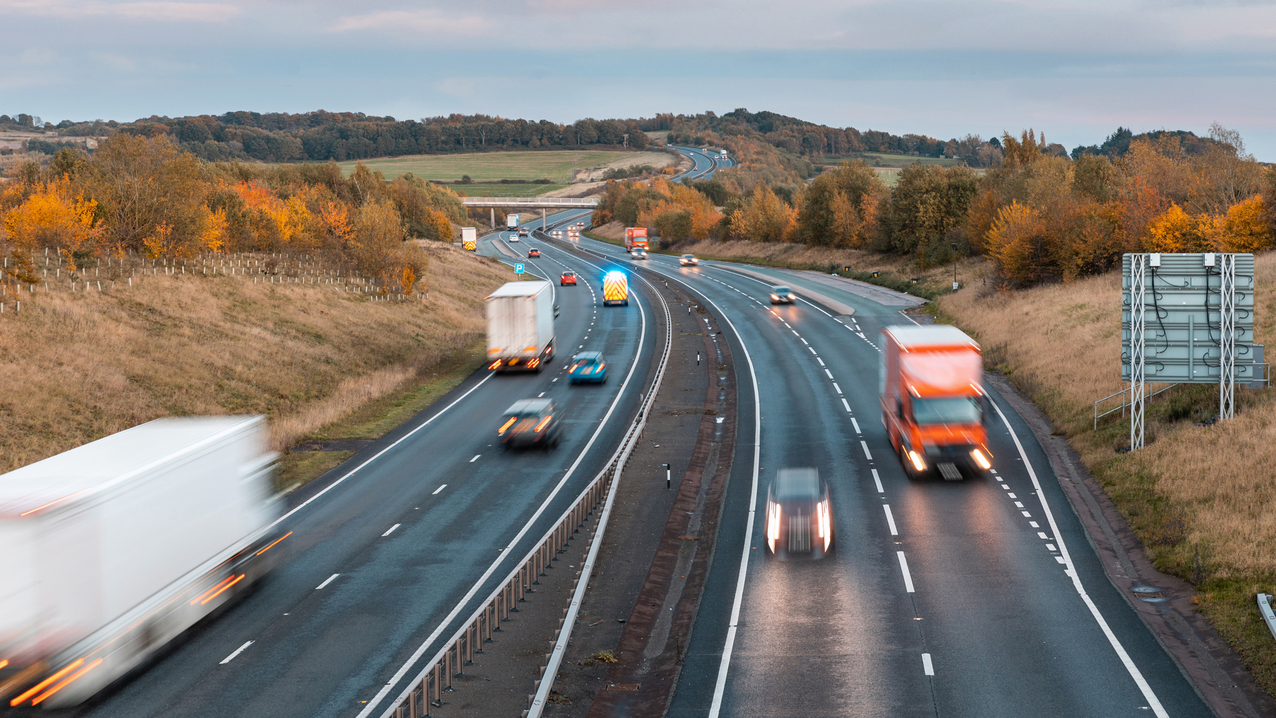
The highways sector in the UK is undergoing significant changes in order to support the country’s net zero goals. Roads are a vital part of the UK’s transport infrastructure, and decarbonising this sector is essential for achieving net zero emissions by 2050, especially considering that it’s the industry that facilitates the country’s emissions-heavy transport load.
Net Zero Highways plan
The Net Zero Highways plan,18 developed by National Highways, outlines an ambitious programme to put roads at the heart of Britain’s net zero future. The plan includes three key commitments:
- Net zero for operations by 2030: Achieving net zero emissions for National Highways’ own operations by 2030. This includes switching to LED lighting, transitioning the vehicle fleet to electric, and planting up to 3 million additional trees.
- Net zero for maintenance and construction by 2040: Delivering net zero road maintenance and construction by 2040. Contractors and suppliers are required to reduce carbon year-on-year by using the latest technologies
and materials. - Net zero carbon travel on roads by 2050: Supporting the transition to zero-emission vehicles and ensuring all vehicles on the network are net zero by 2050 and improving infrastructure for cycling and walking.
Innovative projects
The previous government awarded £30 million in funding to support innovative projects aimed at decarbonising local roads.19 These projects include:
- Asphalt made from grass cuttings: Developing sustainable asphalt using grass cuttings to reduce
carbon emissions. - Carbon capturing cement: Using cement that captures carbon during its production process to lower the carbon footprint of road construction.
- Highways CO2llaboration Centre for Materials Decarbonisation: Transport for West Midlands is supporting upskilling and developing a team to decarbonise highways via initiatives including a ‘Highways CO2llaboration Centre’ and demonstrator sites showcasing and monitoring innovative decarbonised highway materials.
- UK Centre of Excellence for Material Decarbonisation in Local Roads: North Lanarkshire Council is creating a centre that will develop a materials testing programme identifying and deploying the latest tech for road construction, in addition to testing and deploying recycled materials from other industries to build roads.20
- Plant-based living walls: Staffordshire County Council has installed plant-based living walls to tackle roadside emissions. These walls act as natural filters made from plants and mosses as part of a national clean air trial.
- Plastic roads: Cumbria has trialled the use of plastic waste in road construction to boost value for money and reduce environmental impact.21
- Smart Transport Technology: Buckinghamshire Council and Suffolk County Council have demonstrated how the application of smart transport technology can be expanded to offer greater social value, including trials involving drones to detect potholes and fibre cables that detect vibrations from vehicles to dynamically change signal junctions and combat congestion.22

Highways in Europe
- Sustainable and Smart Mobility Strategy: The Sustainable and Smart Mobility Strategy outlines the EU’s plan to achieve a 90% reduction in transport emissions by 2050, including measures to decarbonise road transport.23
- TEN‑T Network: The Trans-European Transport Network (TEN‑T) aims to develop a Europe-wide network of roads, railways, and waterways to promote sustainable and efficient transport.24
Highways in the rest of the World
- United States: The Biden Administration’s Infrastructure Plan includes significant investments in sustainable transport infrastructure and the promotion of electric vehicles.25
- China: China is investing heavily in electric vehicle infrastructure and sustainable road construction as part of its commitment to achieving carbon neutrality by 2060.
- Australia: The Australian Government’s National Electric Vehicle Strategy aims to increase the adoption of electric vehicles and develop supporting infrastructure.26
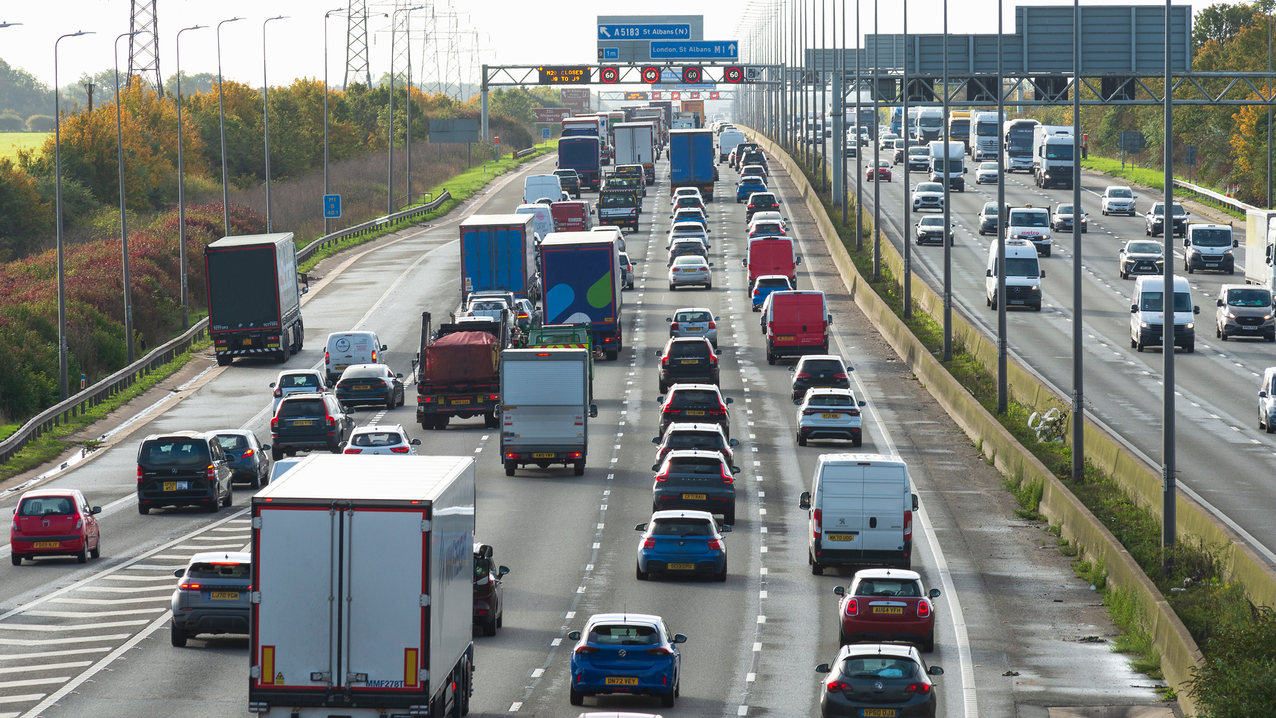
The traffic management sector in the UK is crucial for supporting the transition to net zero emissions. Effective traffic management can optimise traffic flow, reducing idling, queuing, and journey times. The UK has implemented several initiatives to decarbonise traffic management and promote sustainable practices.
Transport Decarbonisation Plan
The Transport Decarbonisation Plan27 sets out key measures which include:
- Improving traffic management: Implementing intelligent traffic management systems to optimise traffic flow and reduce congestion.
- Promoting public transport: Enhancing public transport infrastructure and services to encourage a shift away from private car use.
- Supporting active travel: Investing in cycling and walking infrastructure to promote active travel as a sustainable alternative to driving. ‘We must make public transport, cycling and walking the natural first choice’.28
Smart motorways
The UK has introduced smart motorways to improve traffic flow and reduce congestion on major roads. Smart motorways, of course, use technology to monitor traffic conditions and manage traffic flow dynamically, including variable speed limits and the use of hard shoulders as additional lanes during peak times.29
In April 2023 the Government cancelled plans for new smart motorways. The decision recognised the lack of public confidence and cost pressures.30
The latest safety data for smart motorways (2017−2021) continues to show that overall, all three types of smart motorway are safer than conventional motorways in terms of deaths or serious injuries.
National Highways continue to work with the Department for Transport (DfT) to:
- deliver £900 million in further safety improvements on existing smart motorways
- give motorists clear advice for using existing smart motorways
Urban Traffic management and control
The Urban Traffic Management and Control initiative aims to integrate various traffic management systems to improve urban traffic flow and reduce emissions. Key components include:
- Traffic signal control: Using adaptive traffic signal control systems to optimise traffic flow at intersections.
- Real-time traffic information: Providing real-time traffic information to drivers through variable message signs and mobile apps.
- Incident management: Implementing systems to detect and respond to traffic incidents quickly to minimise disruption.31
Innovative projects
The previous UK Government funded several innovative projects to improve traffic management and reduce emissions. These projects include:
Smart traffic lights: Trials of smart traffic lights that adapt to traffic conditions in real-time to reduce idling and emissions.
Connected and autonomous vehicles: Research and trials of CAVs to improve traffic flow and reduce emissions through more efficient driving patterns while working on the road.
Dynamic road pricing: Implementing dynamic road pricing schemes to manage demand and reduce congestion during peak times.
Local authority initiatives
Many local authorities in the UK are implementing traffic management measures to support net zero goals. Examples include:
- Low Emission Zones: Establishing LEZs to restrict access for high-emission vehicles and encourage the use of cleaner alternatives.
- Congestion charging: Introducing congestion charging schemes to reduce traffic volumes and emissions in city centres.
- School streets: Implementing School Streets schemes to restrict vehicle access around schools during drop-off and pick-up times to improve air quality and safety.
Traffic management in Europe
- European Green Deal: The Green Deal includes significant investments in sustainable transport infrastructure and intelligent traffic management systems.32
- Sustainable and Smart Mobility Strategy: The Sustainable and Smart Mobility Strategy outlines the EU’s plan to achieve a 90% reduction in transport emissions by 2050, including measures to improve traffic management and promote sustainable transport modes.33
- Intelligent Transport Systems (ITS): The Intelligent Transport Systems (ITS) directive promotes the deployment of ITS to improve traffic management, reduce congestion, and enhance road safety across Europe.34
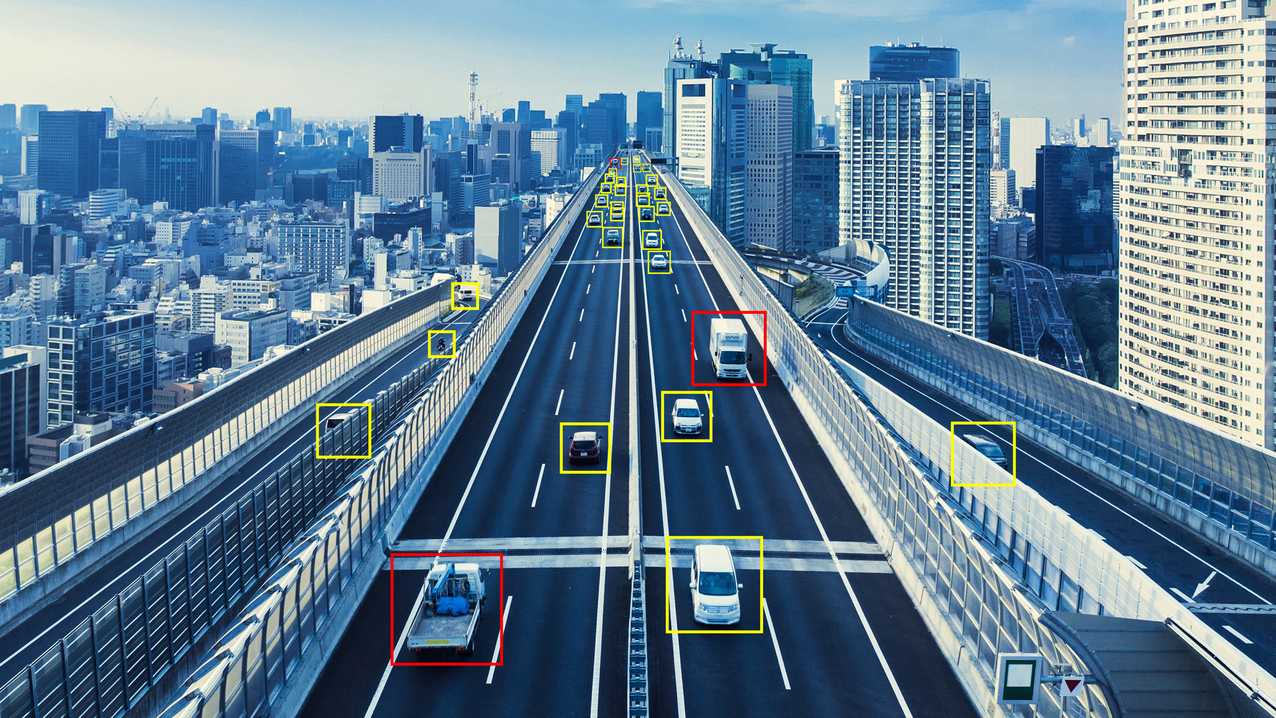
Traffic management in the rest of the world
- United States: In the United States, the Biden administration’s plan includes significant investments in intelligent traffic management systems and the promotion of sustainable transport modes.35
- China is investing heavily in smart traffic management systems and intelligent transport infrastructure.
- Japan has implemented advanced traffic management systems, including adaptive traffic signal control and real-time traffic information, to reduce congestion and emissions.
- Singapore is a leader in intelligent transport systems, with initiatives such as the Electronic Road Pricing (ERP) scheme to manage traffic demand and reduce congestion.36
- South Korea has developed a comprehensive Smart Traffic Management System to optimise traffic flow and reduce emissions in urban areas.37
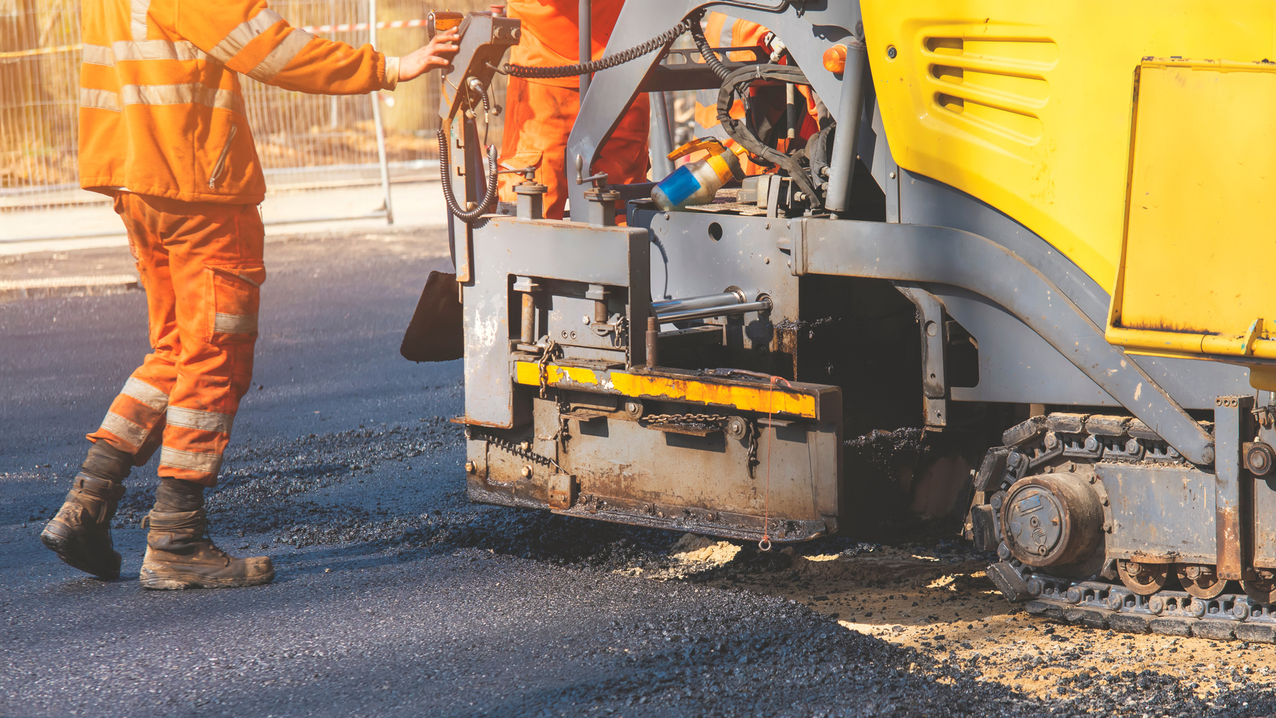
The surfacing sector in the UK is working towards reducing its carbon footprint and supporting the UK’s net zero targets through innovative materials and sustainable practices.
Net zero strategy
Similar to other sections of the report, Net Zero Strategy: Build Back Greener also outlines policies and proposals for decarbonising the surfacing sector.38 Key initiatives include:
- Promoting low-carbon materials: Encouraging the use of low-carbon asphalt and other surfacing materials to reduce emissions.
- Improving energy efficiency: Enhancing the energy efficiency of surfacing operations through better planning and the use of advanced technologies.
- Supporting innovation: Investing in research and development to advance new technologies and solutions for sustainable surfacing.
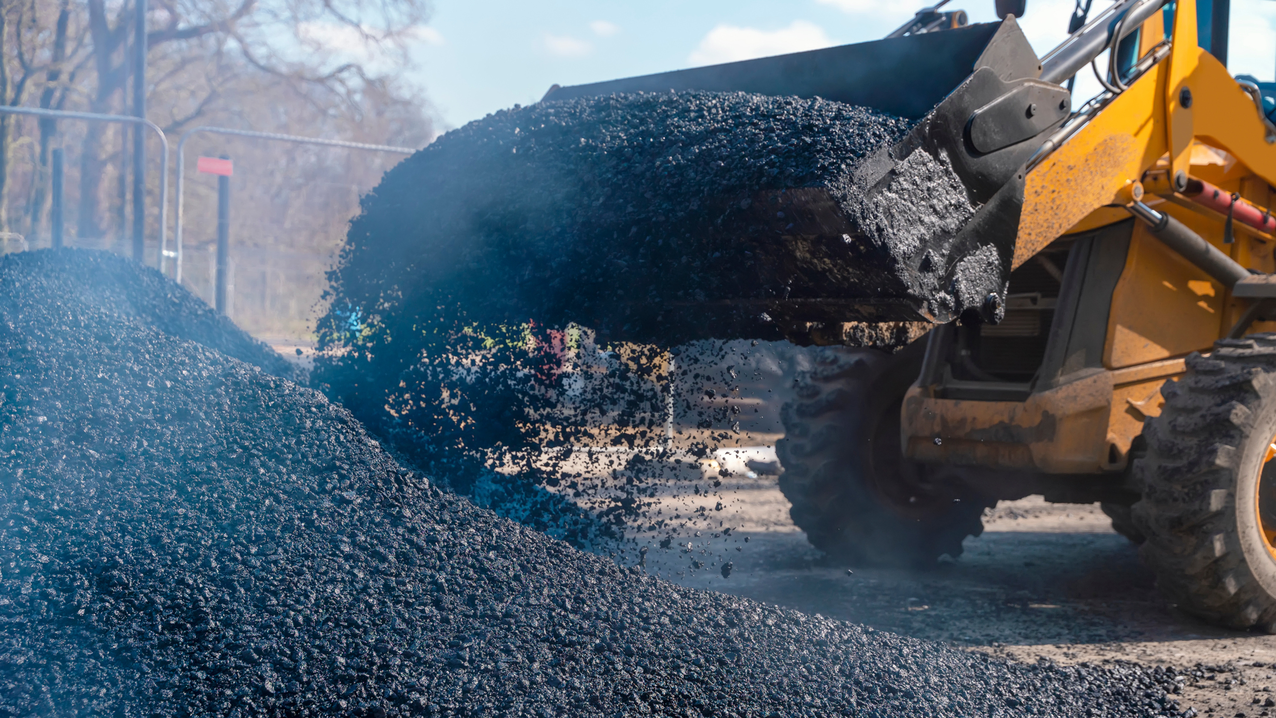
Innovative surfacing projects
The UK Government has funded several innovative projects aimed at decarbonising the surfacing sector:
- Asphalt made from grass cuttings: Developing sustainable asphalt using grass cuttings to reduce carbon emissions.39
- Carbon capturing cement: Using cement that captures carbon during its production process to lower the carbon footprint of road construction.40
- Recycled plastic roads: Cumbria has trialled the use of plastic waste in road construction to boost value for money and reduce environmental impact.41
- Warm mix asphalt: Promoting the use of warm mix asphalt, which requires less energy to produce and lay compared to traditional hot mix asphalt.
- Graphene-enhanced asphalt: Researching the use of graphene in asphalt to improve durability and reduce the frequency of resurfacing.
- Rubberised asphalt: Using recycled rubber from tyres in asphalt to enhance performance and reduce waste.
Addressing the skills gap is crucial for the surfacing sector to achieve net zero.
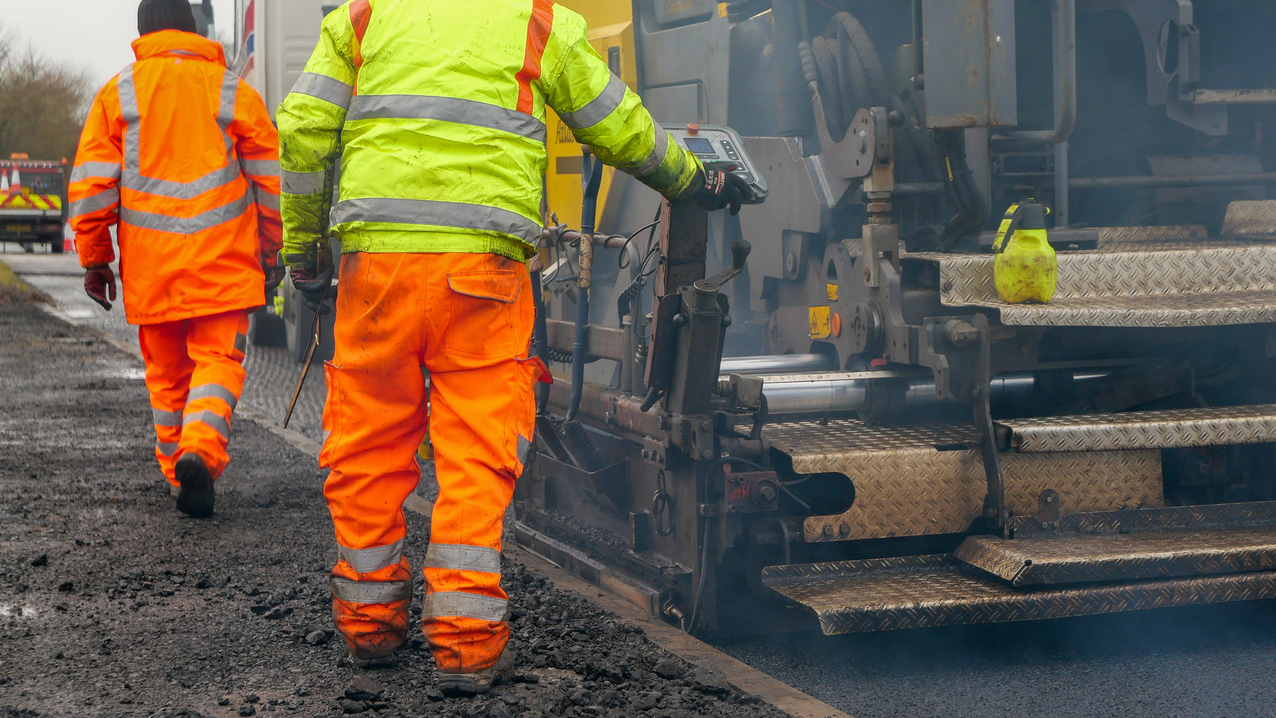
Industry standards and guidelines
The Highways England Sustainable Development Strategy provides a framework for integrating sustainability into all aspects of road design, construction, and maintenance.42 This strategy includes:
- Sustainable materials: Promoting the use of recycled and low-carbon materials in surfacing projects.
- Energy efficiency: Implementing energy-efficient practices in surfacing operations.
- Waste reduction: Reducing waste through better planning and recycling practices.
Skills and training
Addressing the skills gap is crucial for the surfacing sector to achieve net zero. The Construction Industry Training Board (CITB) has developed a Net Zero Action Plan to equip the workforce with the necessary skills and training.43
This plan includes:
- Research and analysis: Identifying the skills needed for net zero and developing relevant training programmes.
- Standards and guidelines: Establishing clear standards and qualifications for net zero construction practices.
- Training: Investing in training programmes to ensure the workforce is equipped with the skills needed for sustainable construction.
- Collaboration: Working with industry partners and government bodies to ensure coordinated efforts and investment in skills development.
Surfacing in Europe
- European Green Deal: The European Union’s Green Deal aims to make Europe the first climate-neutral continent by 2050. This includes significant investments in sustainable road surfacing practices and the promotion of low-carbon materials.44
- Circular Economy Action Plan: The Circular Economy Action Plan promotes the use of sustainable materials and the reduction of construction waste through recycling and reuse.45
- Sustainable Road Surfacing Projects: Various EU-funded projects are exploring innovative surfacing materials and techniques, such as the use of recycled materials and warm mix asphalt.
Surfacing in the rest of the world
- United States: The Biden Administration’s Infrastructure Plan includes significant investments in sustainable road surfacing practices and the promotion of low-carbon materials.46
- China is investing in sustainable road surfacing technologies, including the use of recycled materials and low-carbon asphalt, as part of its commitment to achieving carbon neutrality by 2060.47
- Australia: The Australian Road Research Board (ARRB) is conducting research on sustainable road surfacing materials and techniques, including the use of recycled materials and warm mix asphalt.48
- India is exploring the use of plastic waste in road construction to reduce environmental impact and improve road durability.49
- Canada is investing in sustainable road surfacing technologies, including the use of recycled materials and low-carbon asphalt, to support its net zero targets.
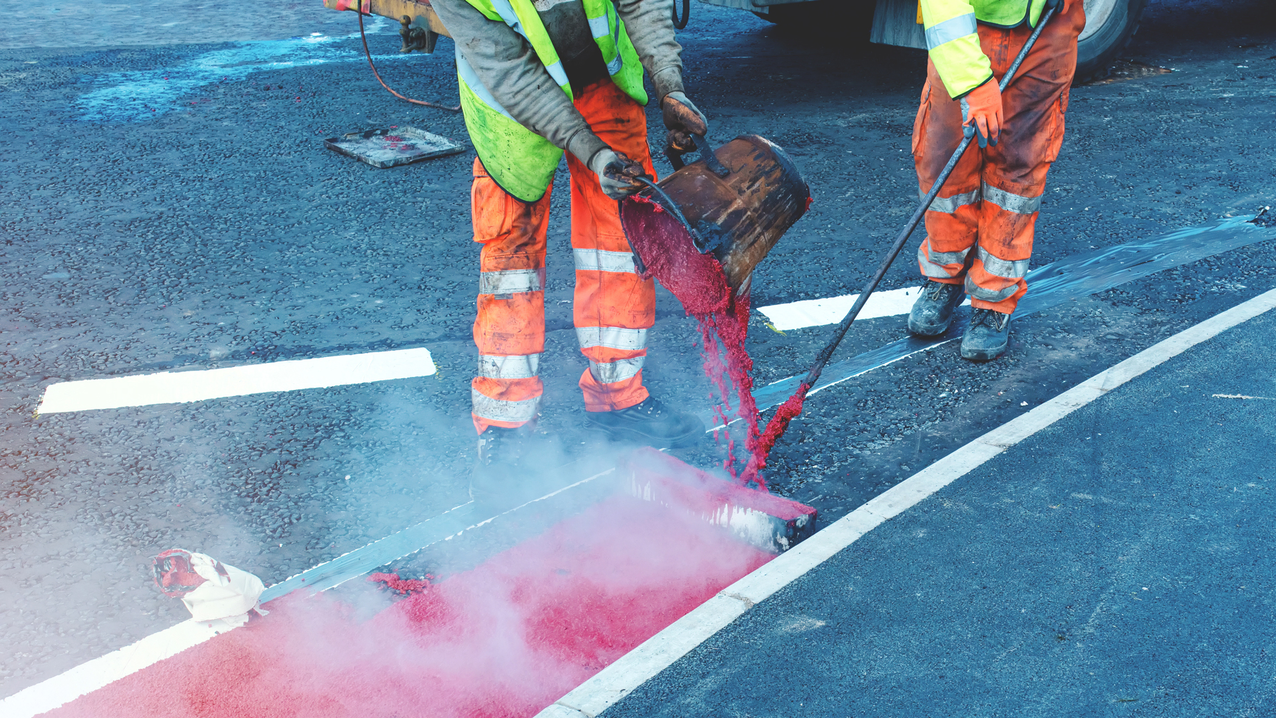
The line marking sector in the UK plays a crucial role in maintaining road safety and managing traffic flow. As part of the broader effort to achieve net zero emissions by 2050, the sector is adopting innovative practices and materials to reduce its carbon footprint.
Net Zero Strategy
The UK Government’s Net Zero Strategy: Build Back Greener outlines policies and proposals for decarbonising all sectors of the UK economy, including the line marking sector.50 Key initiatives include:
- Promoting low-carbon materials: Encouraging the use of low-carbon line marking materials to reduce emissions.
- Improving energy efficiency: Enhancing the energy efficiency of line marking operations through better planning and the use of advanced technologies.
- Supporting innovation: Investing in research and development to advance new technologies and solutions for sustainable line marking.
Carbon emissions of line marking
A comprehensive white paper on the carbon emissions of line marking has been released, highlighting the potential for significant carbon reduction.51 Key findings include:
- Cold applied line marking systems: These systems can reduce net carbon consumption by up to 10 times compared to hot thermoplastic line marking applications.
- Electric application equipment: Using electric equipment for line marking can further reduce emissions and improve efficiency.
- Improved durability: Cold applied systems offer better durability, leading to cost savings and higher retained reflectivity for road safety.
Innovative line marking projects
The UK Government has funded several innovative projects aimed at decarbonising the line marking sector. These projects include:
- Cold Applied Plastic (CAP) markings: Trials of CAP markings, which are applied at ambient temperatures and have a lower carbon footprint compared to traditional hot-applied thermoplastics.
- Waterborne paints: Promoting the use of waterborne paints for line marking, which emit fewer volatile organic compounds (VOCs) and have a lower environmental impact.
- Reflective glass beads: Using reflective glass beads in line markings to enhance visibility and reduce the need for frequent reapplication.
Industry standards and guidelines
The Highways England Sustainable Development Strategy provides a framework for integrating sustainability into all aspects of road design, construction, and maintenance, including line marking.52 This strategy includes:
- Sustainable materials: Promoting the use of recycled and low-carbon materials in line marking projects.
- Energy efficiency: Implementing energy-efficient practices in line marking operations.
- Waste reduction: Reducing waste through better planning and recycling practices.
Skills and training
Addressing the skills gap is crucial for the line marking sector to achieve net zero. The Construction Industry Training Board (CITB) has developed a Net Zero Action Plan to equip the workforce with the necessary skills and training.53 This plan includes:
- Research and analysis: Identifying the skills needed for net zero and developing relevant training programmes.
- Standards and guidelines: Establishing clear standards and qualifications for net zero construction practices.
- Training: Investing in training programmes to ensure the workforce is equipped with the skills needed for sustainable construction.
- Collaboration: Working with industry partners and government bodies to ensure coordinated efforts and investment in skills development.
Line marking in Europe
- European Green Deal: The European Union’s Green Deal aims to make Europe the first climate-neutral continent by 2050. This includes significant investments in sustainable road marking practices and the promotion of low-carbon materials.54
- Circular Economy Action Plan: The Circular Economy Action Plan promotes the use of sustainable materials and the reduction of construction waste through recycling and reuse.55
- Sustainable road marking projects: Various EU-funded projects are exploring innovative line marking materials and techniques, such as the use of recycled materials and waterborne paints.
Line marking in the rest of the world
- United States: The Biden Administration’s Infrastructure Plan includes significant investments in sustainable road marking practices and the promotion of low-carbon materials.56
- China: China is investing in sustainable road marking technologies, including the use of recycled materials and low-carbon paints, as part of its commitment to achieving carbon neutrality by 2060.
- Australia: The Australian Road Research Board (ARRB) is conducting research on sustainable road marking materials and techniques, including the use of recycled materials and waterborne paints.57
- India: India is exploring the use of plastic waste in road marking to reduce environmental impact and improve road durability.
- Canada: Canada is investing in sustainable road marking technologies, including the use of recycled materials and low-carbon paints, to support its net zero targets.
- Japan: Japan is implementing advanced road marking technologies, including the use of reflective glass beads and waterborne paints, to enhance road safety and reduce emissions.58

Location: United Kingdom
Problem addressed
National Highways aimed to reduce carbon emissions from England’s busiest roads. The company faced challenges related to high emissions from road construction, maintenance, and vehicle use.59
What they’ve done
Corporate emissions reduction
- Renewable energy: National Highways committed to generating 10% of its electricity from renewable sources on or near its sites by 2030. This includes installing solar panels and wind turbines at various locations.
- LED lighting: The company is switching 70% of its network lights to LED by 2027, significantly reducing energy consumption and emissions.
- Electric vehicle fleet: National Highways increased its low-emission vehicle fleet to 67%, including electric and hybrid vehicles, to reduce emissions from its operations.
Construction and maintenance
- Low-carbon materials: The organisation published net zero roadmaps for concrete, steel, and asphalt, promoting the use of low-carbon materials in road construction and maintenance.
- PAS2080 verification: National Highways became the first roads organisation in the world to receive PAS2080 verification, a standard for managing carbon in infrastructure.
- Low Carbon Opportunities Register: The organisation launched a register to identify and implement low-carbon opportunities in its projects.
Road user emissions
- Electric vehicle charging infrastructure: National Highways is expanding the electric vehicle charging infrastructure along its network to support the transition to electric vehicles.
- Tree planting: The company plans to plant at least 3 million trees on or near its land by 2030 to offset carbon emissions and enhance biodiversity.
- Cycleways: National Highways has completed 150 cycleway schemes in the past five years, promoting sustainable transportation options.
Prospects for the future
National Highways is committed to achieving net zero for its own operations by 2030, for maintenance and construction by 2040, and for road travel by 2050. The company will continue to invest in renewable energy, low-carbon materials, and sustainable transportation infrastructure.
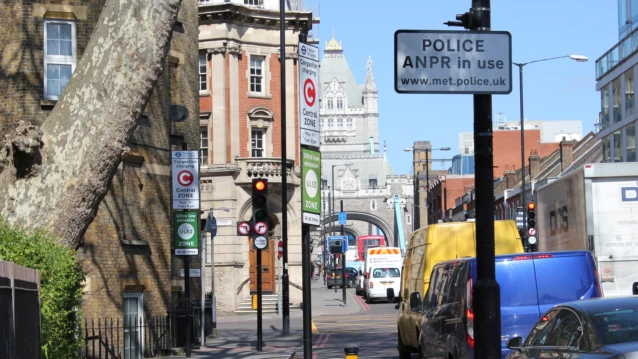
Location: United Kingdom
Problem addressed
Transport for London (TfL) aimed to reduce air pollution and carbon emissions in central London. The city faced challenges related to high levels of vehicle emissions, contributing to poor air quality and health issues..
What they’ve done
Implementation of ULEZ
- Zone establishment: TfL established the Ultra Low Emission Zone (ULEZ) in central London, requiring vehicles to meet strict emissions standards or pay a daily charge to enter the zone.
- Expansion: The ULEZ was expanded to cover a larger area, including the North and South Circular roads, to further reduce emissions across the city.
- Enforcement: TfL implemented robust enforcement measures, including automatic number plate recognition (ANPR) cameras, to ensure compliance with ULEZ regulations.
Public awareness campaigns
- Information dissemination: TfL launched extensive public awareness campaigns to inform residents and businesses about ULEZ, its benefits, and how to comply with the regulations.
- Support programs: The organisation provided support programs, such as grants and incentives, to help residents and businesses transition to low-emission vehicles.
Monitoring and evaluation
- Air quality monitoring: TfL installed air quality monitoring stations throughout the ULEZ to measure the impact of the zone on air pollution levels.
- Data analysis: The organisation conducted regular data analysis to assess the effectiveness of ULEZ and identify areas for improvement.
Prospects for the future
TfL plans to continue expanding the ULEZ and enhancing its enforcement measures. The organisation is also exploring additional initiatives, such as zero-emission zones and further incentives for electric vehicle adoption, to achieve its goal of net zero emissions by 2030.
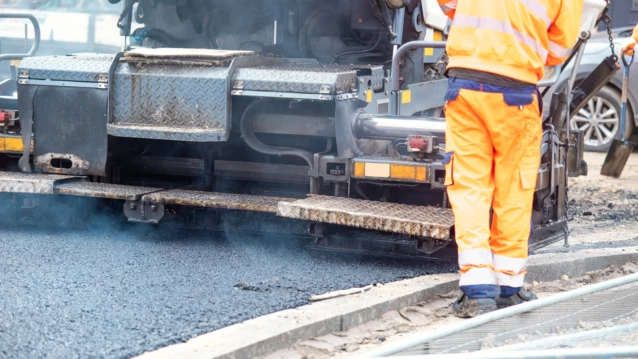
Location: United Kingdom
Problem addressed
Tarmac aimed to reduce the carbon footprint of its asphalt production and road surfacing operations. The company faced challenges related to high energy consumption and emissions from traditional asphalt production processes.61
What they’ve done
Low-Carbon Asphalt
- Warm mix asphalt: Tarmac developed warm mix asphalt, which is produced at lower temperatures than traditional hot mix asphalt. This reduces energy consumption and carbon emissions during production.
- Recycled materials: The company incorporated recycled materials, such as reclaimed asphalt pavement (RAP) and recycled rubber, into its asphalt mixes to reduce the demand for new raw materials and lower emissions.
- Innovative binders: Biogenic asphalt binder technology effectively locks away carbon absorbed during the growth of the biomass element, turning the road into a carbon sink. Since the asphalt can be recycled at the end of the pavement life, most of this carbon will not re-enter the atmosphere. According to available data, biogenic asphalt technology could potentially reduce the carbon footprint of a typical asphalt mix by approximately 40%.62
Sustainable production
- Energy-efficient plants: Tarmac have built new asphalt production plants with innovative, industry-leading sustainable features to improve operational efficiency and reduce associated carbon emissions. This includes underfloor heating in covered storage bays to reduce aggregate moisture content and fuel use, reducing carbon emissions by an estimated 14 per cent each year.63
- Renewable energy: Tarmac has continued to procure 100% of its power supply from renewable energy sources, meaning our electricity comes from UK wind, solar or hydro assets. As a result our scope 2 (purchased electricity) carbon emissions remain zero.64
Sustainable practices
- Circular economy: Tarmac adopted circular economy principles, focusing on recycling and reusing materials to minimise waste and promote resource efficiency.
- Supply chain engagement: The company engaged with its supply chain partners to promote sustainable practices and reduce emissions across the entire value chain.
- Community engagement: Tarmac worked with local communities to raise awareness about the benefits of sustainable surfacing practices and promote environmental stewardship.65

Location: Lyon, France
Problem addressed
Colas aimed to enhance road safety and promote sustainable mobility on the La Doua University campus in Lyon, France. The project sought to improve visibility at a complex junction between a tram line and a cycle path.66
What they’ve done
Key features of the project included:
Flowell technology: This dynamic light-emitting road marking solution enhanced visibility and safety at the junction.
Urbalith surfacing: The cycle path was paved with a permeable, recyclable, natural-looking material, and combined with Flowell.
Sustainable worksite practices: The base camp was equipped with solar panels, producing an average of 30 kWh per day. This allowed it not only to be self-sufficient in electricity, but also to inject any surplus into the public power grid. The crews also used an electric van, which saved 6 tons of CO2 equivalent compared to a fossil-fuel vehicle.
Impact
The project successfully combined innovation and sustainability to create a safer and more environmentally friendly campus environment. The Flowell solution has improved visibility at the junction, and the use of sustainable materials and practices has reduced the project’s
carbon footprint.
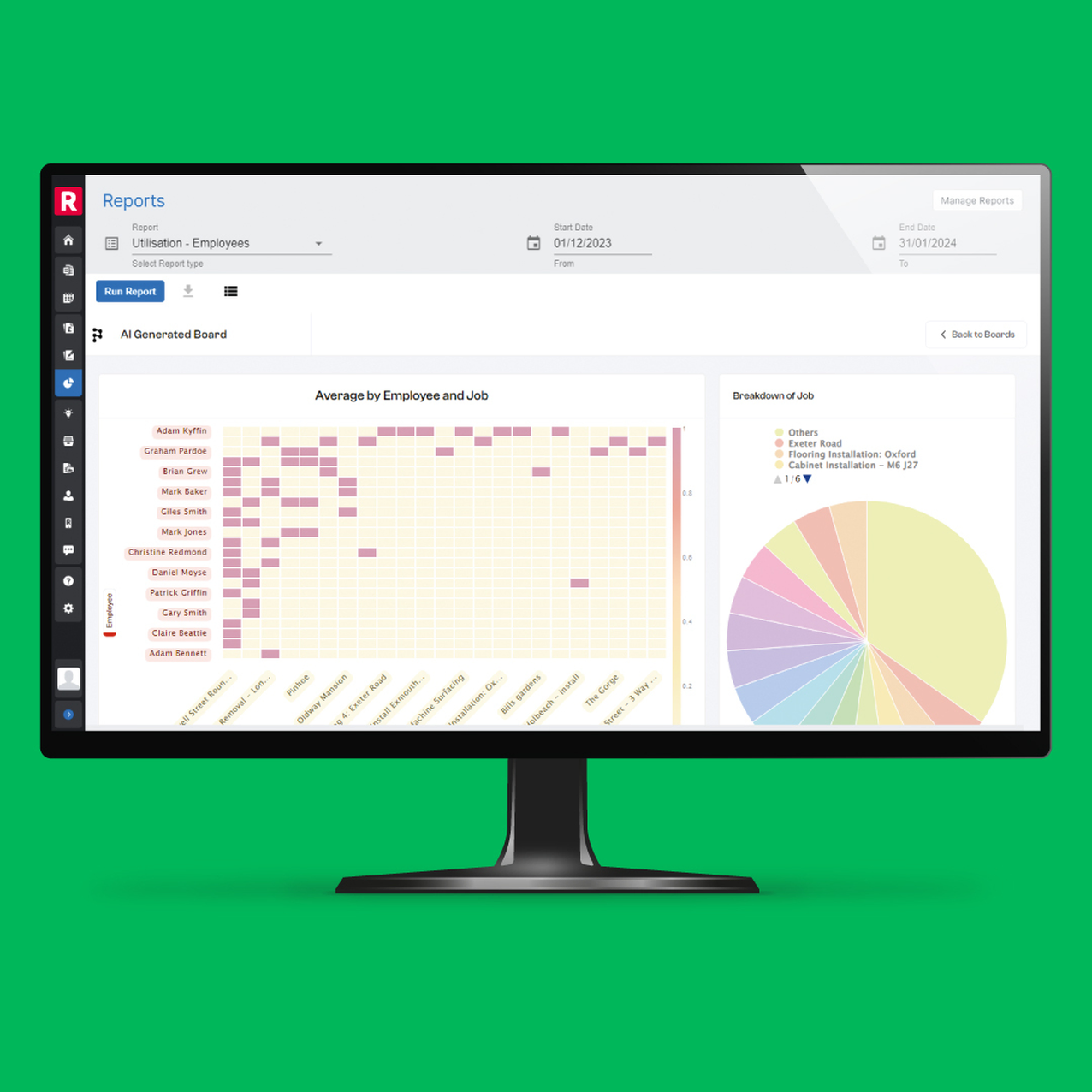
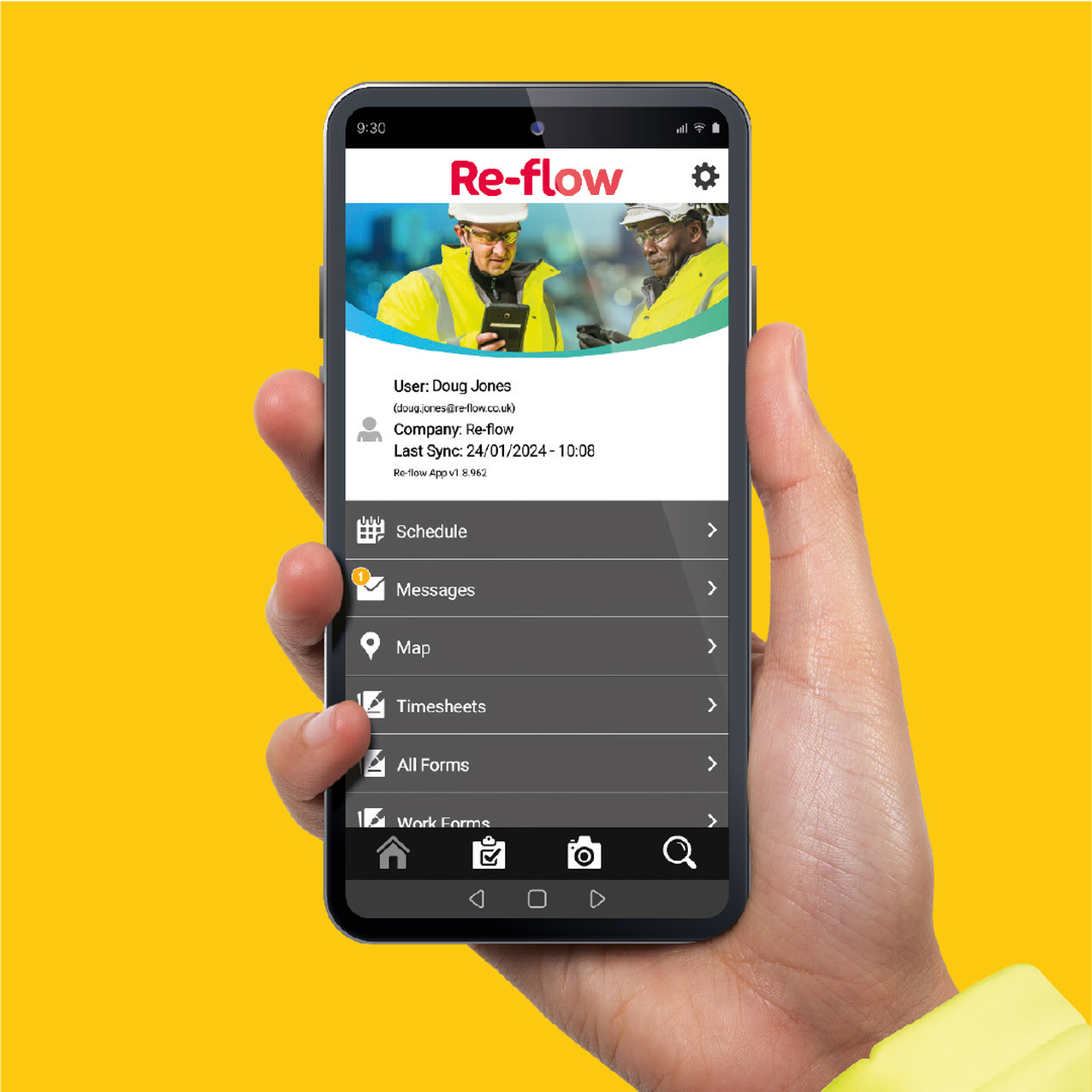
See, manage, refine
When building an office block you don’t start with the roof. The foundation of any successful modern business is the way it organises and manages its assets and – more relevant every day – how it tracks and responds to data. The resultant efficiency savings have an impact on competitiveness and a company’s bottom line, and also on its ecological impact.
Custom forms and calculating emissions
Liam McStay, quality and technical sales supervisor of innovative highways company Kiely Group, who perform carriageway and footpath surfacing and surface treatments, explained how they used Re-flow’s configurable forms to analyse their carbon footprint and make decisions based on the data they collect:
‘Re-flow serves as a database to manage and calculate carbon emissions per site and contract,’ he said. ‘The process involves foremen documenting daily material usage in their diary sheets, including the rate of spread for materials like bitumen emulsion, and aggregate.
‘This data can be categorised by site or contract, providing a comprehensive view of our material consumption and allowing us to calculate our total carbon footprint. Although paper records are an option, using Re-flow’s digital platform improves efficiency and accessibility when reporting carbon metrics.’
Not insignificantly, he added, ‘We can provide this to clients and authorities that are increasingly focusing on carbon metrics.’
Re-flow is able to collate carbon emissions and generate reports that highlight areas of the business that are lagging behind. Becoming factually aware of this kind of data is essential for making informed decisions.
Field management software leads to more efficient and therefore more ecological resource scheduling
Some ecological benefits speak for themselves:
- The complete elimination of paper from businesses
- Job packs, forms, and other necessary documents being made available through the app, which not only reduces paper, but also eliminates the need for unnecessary trips to and from site
- Forms mandating photos of completed works eliminating the need for managers to make journeys to check sites
Optimised equipment runs more efficiently
Tracking MOTs, defects, and service dates of vehicles, machinery, and plant can be chaotic under an unoptimised management system. Extracted over multiple pieces of kit across multiple sites and multiple years, the impact of poorly-functioning tools can have a significant impact on carbon emissions.
Field management software like Re-flow internalises data and schedules and automates notifications whenever equipment needs attention. It also makes logging defects as easy as tapping a few buttons and snapping a photo. Suddenly everything in the business is running as well as It possibly can.
Vehicles with under-inflated tyres, or faulty engines spluttering extra emissions become things of the past.
Route planning
Flipping between management programs and online maps that lack any correlation to job data is a time drag. Re-flow’s map view gives an overview of the location of equipment, services, and jobs. Managers are therefore able to plan the best, most fuel-efficient routes.
A final word
In a time of great change, field management software is one facet of multiple revolutions within our industries. It’s streamlining the way businesses operate, making them more efficient, cost-effective, and environmentally friendly.
By tweaking workflows, improving data management, and automating key processes, companies can not only enhance their productivity but also significantly reduce their carbon footprint.
Many small improvements ultimately lead to very significant change.
As the construction industry continues to evolve, embracing these digital tools will be essential for achieving net zero goals and staying competitive in an increasingly eco-conscious market.
References
1 https://www.weforum.org/agenda/2022/02/net-zero-risks-benefits-climate/
3 https://www.weforum.org/agenda/2022/02/net-zero-risks-benefits-climate/
4 https://www.gov.uk/government/publications/net-zero-strategy
5 https://www.mckinsey.com/capabilities/sustainability/our-insights/the-net-zero-transition-what-it-would-cost-what-it-could-bring
6 https://www.gov.uk/government/news/uks-path-to-net-zero-set-out-in-landmark-strategy#:~:text=A%20landmark%20Net%20Zero%20Strategy,government%20today%20(19%20October).
7 https://www.irena.org/-/media/Files/IRENA/Agency/Publication/2022/Sep/IRENA_Renewable_energy_and_jobs_2022.pdf
8 https://www.energy-uk.org.uk/publications/mission-possible-the-steps-to-make-britain-a-clean-energy-superpower/
9 https://labour.org.uk/change/make-britain-a-clean-energy-superpower/
10 https://www.nationalgrid.com/stories/energy-explained/what-is-ccs-how-does-it-work
11 https://www.nationalgrid.com/stories/energy-explained/what-is-hydrogen
12 https://www.energy.gov/eere/water/advantages-marine-energy
13 https://labour.org.uk/change/make-britain-a-clean-energy-superpower/
14 https://labour.org.uk/change/make-britain-a-clean-energy-superpower/
15 https://labour.org.uk/wp-content/uploads/2024/03/Make-Britain-a-Clean-Energy-Superpower.pdf
16 https://www.autocar.co.uk/car-news/electric-cars/labour-would-reinstate-2030-ban-new-ice-car-sales
17 https://labour.org.uk/wp-content/uploads/2024/03/Make-Britain-a-Clean-Energy-Superpower.pdf
18 https://nationalhighways.co.uk/netzerohighways/
19 https://www.gov.uk/government/news/30-million-government-funding-for-innovative-projects-to-decarbonise-uk-highways
20 https://www.adeptnet.org.uk/live-labs‑2/north-lanarkshire-council-uk-centre-excellence-decarbonising-roads-%E2%80%93-north-campus
21 https://www.local.gov.uk/case-studies/cumbria-county-council-plastic-roads
22 https://www.gov.uk/government/publications/transport-decarbonisation-plan
23 https://transport.ec.europa.eu/index_en
24 https://transport.ec.europa.eu/index_en
25 https://www.whitehouse.gov/briefing-room/statements-releases/2021/03/31/fact-sheet-the-american-jobs-plan/
26 https://www.dcceew.gov.au/energy/transport/national-electric-vehicle-strategy
27 https://www.gov.uk/government/publications/transport-decarbonisation-plan
28 https://assets.publishing.service.gov.uk/media/610d63ffe90e0706d92fa282/decarbonising-transport-a-better-greener-britain.pdf
29 https://www.gov.uk/government/publications/smart-motorway-evidence-stocktake-and-action-plan
30 https://nationalhighways.co.uk/our-work/smart-motorways-evidence-stocktake/#:~:text=In%20April%202023%20the%20Government,public%20confidence%20and%20cost%20pressures.
31 https://www.ciht.org.uk/media/4367/urban_traffic_management_and_control_systems.pdf
32 https://commission.europa.eu/strategy-and-policy/priorities-2019 – 2024/european-green-deal_en
33 https://transport.ec.europa.eu/index_en
34 https://transport.ec.europa.eu/index_en
35 https://www.whitehouse.gov/briefing-room/statements-releases/2021/03/31/fact-sheet-the-american-jobs-plan/
36 https://www.weforum.org/agenda/2021/12/how-road-pricing-is-tackling-congestion-and-pollution-in-cities/
37 https://seoulsolution.kr/en/content/transport-system-management-tsm
38 https://www.gov.uk/government/publications/net-zero-strategy
39 https://www.gov.uk/government/news/30-million-government-funding-for-innovative-projects-to-decarbonise-uk-highways
40 https://www.gov.uk/government/news/30-million-government-funding-for-innovative-projects-to-decarbonise-uk-highways
41 https://www.local.gov.uk/case-studies/cumbria-county-council-plastic-roads
42 https://www.gov.uk/government/publications/highways-england-sustainable-development-strategy
43 https://www.citb.co.uk/about-citb/what-we-do/plans-and-performance/net-zero-action-plan/
44 https://commission.europa.eu/strategy-and-policy/priorities-2019 – 2024/european-green-deal_en
45 https://environment.ec.europa.eu/strategy/circular-economy-action-plan_en
46 https://www.whitehouse.gov/briefing-room/statements-releases/2021/03/31/fact-sheet-the-american-jobs-plan/
47 https://interactive.carbonbrief.org/the-carbon-brief-profile-china/
48 https://www.arrb.com.au/
49 https://www.bbc.com/future/article/20210302-could-plastic-roads-make-for-a-smoother-ride
50 https://www.gov.uk/government/publications/net-zero-strategy
51 https://netzerocarbonhighways.com/carbon-emissions-of-line-marking-white-paper-released/
52 https://www.gov.uk/government/publications/highways-england-sustainable-development-strategy
53 https://www.citb.co.uk/about-citb/what-we-do/plans-and-performance/net-zero-action-plan/
54 https://commission.europa.eu/strategy-and-policy/priorities-2019 – 2024/european-green-deal_en
55 https://environment.ec.europa.eu/strategy/circular-economy-action-plan_en
56 https://www.whitehouse.gov/briefing-room/statements-releases/2021/03/31/fact-sheet-the-american-jobs-plan/
57 https://www.arrb.com.au/
58 https://www.mlit.go.jp/road/road_e/index2_e.html
59 https://nationalhighways.co.uk/media/eispcjem/net-zero-highways-our-2030 – 2040-2050-plan.pdf
60 https://www.london.gov.uk/new-report-shows-ulez-expansion-working-95-cent-vehicles-across-inner-and-outer-london-now-compliant
61 https://automateddigitalroads.tarmac.com/materials/
62 https://automateddigitalroads.tarmac.com/materials/
63 https://www.barbourproductsearch.info/tarmac-launches-new-modern-and-sustainable-news124524.html#:~:text=The%20new%20plant%20has%20been,and%20reduce%20associated%20carbon%20emissions.
64 https://sustainability-report.tarmac.com/planet/climate-action/#:~:text=Tarmac%20has%20continued%20to%20procure,electricity)%20carbon%20emissions%20remain%20zero.
65 https://sustainability-report-2018.tarmac.com/people/community-involvement/index.htm
66 https://www.colas.com/en/media/press-releases/colas-combines-innovation-and-sustainable-development-campus-la-doua-university-in-lyon-france/